


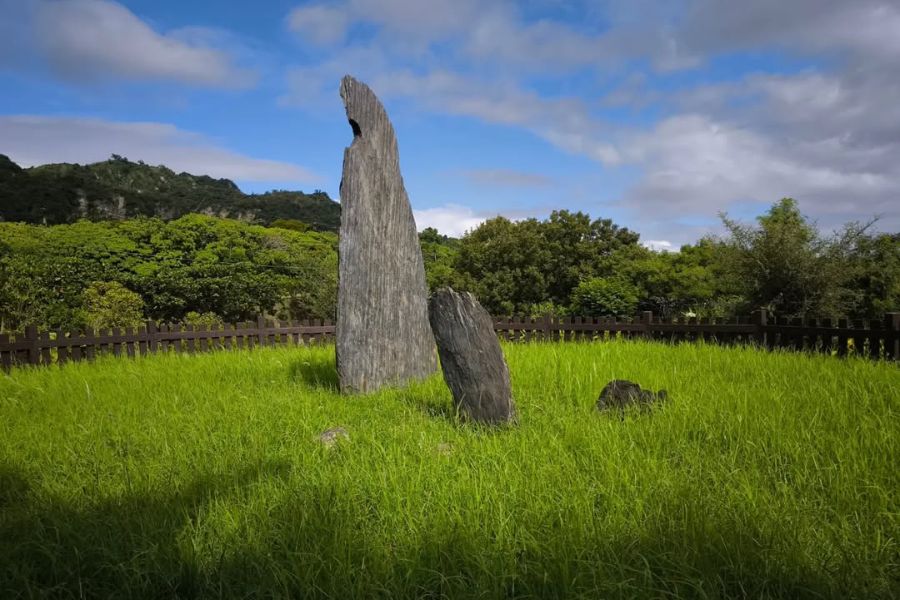
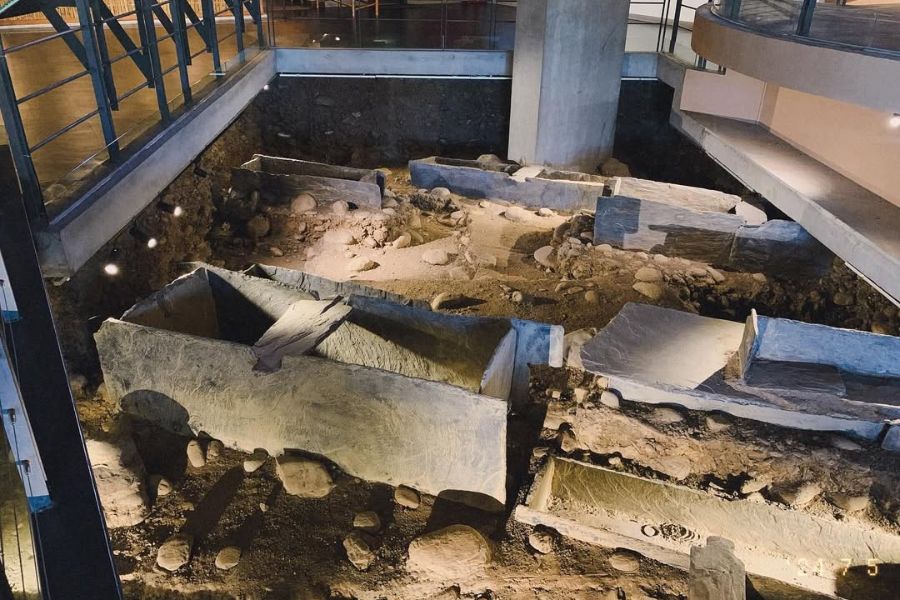
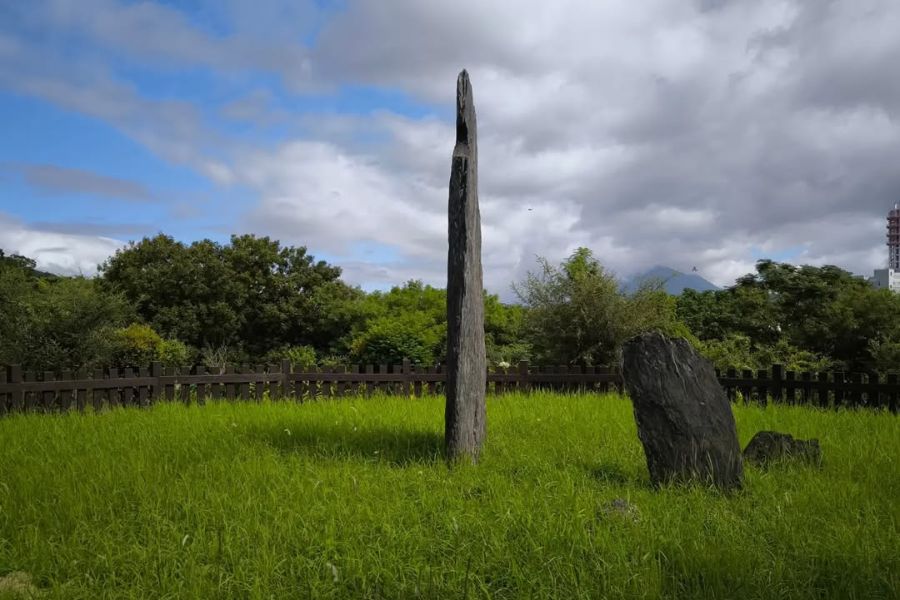
Standing behind Taitung Railway Station, the Moon-shaped Stone Pillar is not an isolated relic, but the remaining core of what was once a fully developed prehistoric settlement. Rising approximately four meters high and measuring 153 centimeters wide, this slate pillar derives its name from a damaged semicircular perforation at its top. Today, it is the only prehistoric structure still standing at its original location within the Beinan Archaeological Site. In 1980, construction of the South-Link Railway unexpectedly revealed the secrets buried beneath this land. Archaeologists uncovered around 2,000 graves and more than 20,000 artifacts, including pottery, stone tools, and jade objects, across an excavation area exceeding 10,000 square meters. These discoveries set an unprecedented record in Taiwan’s archaeological history and established the Beinan Site as the largest slate coffin burial complex in the Pacific Rim and Southeast Asia.
(Photo credit: @tony2215)
(Photo credit: @smilevivi_today )
From Burials to Dwellings: A Complete Settlement Landscape
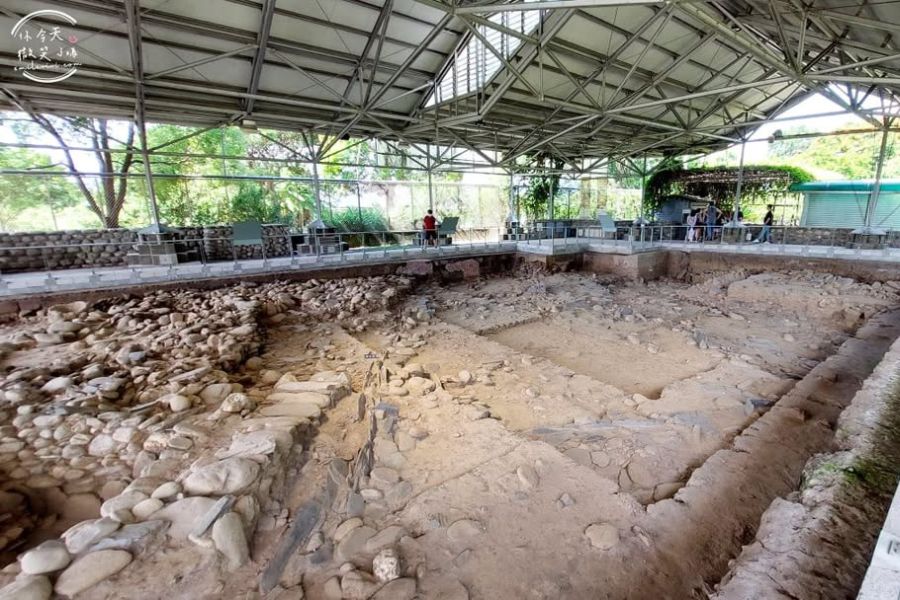
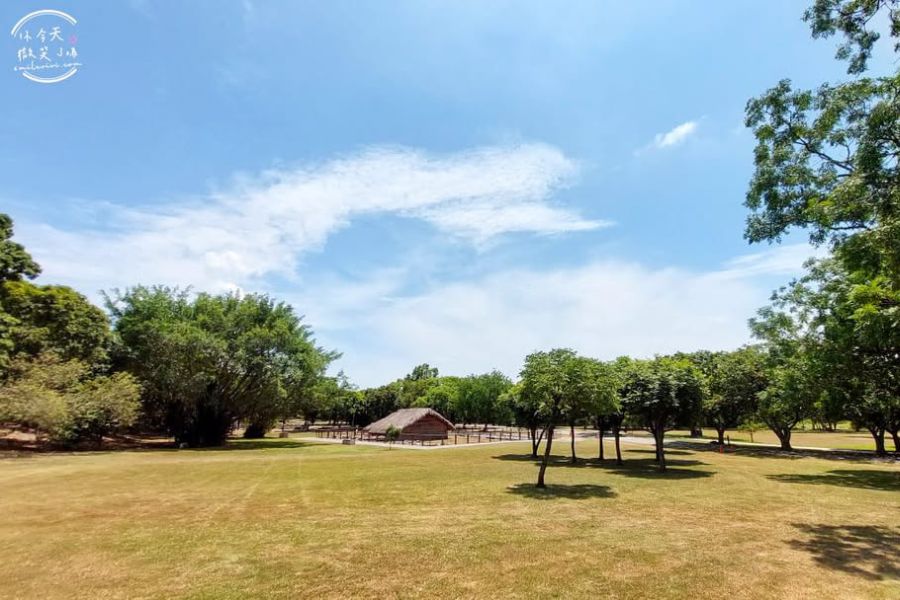
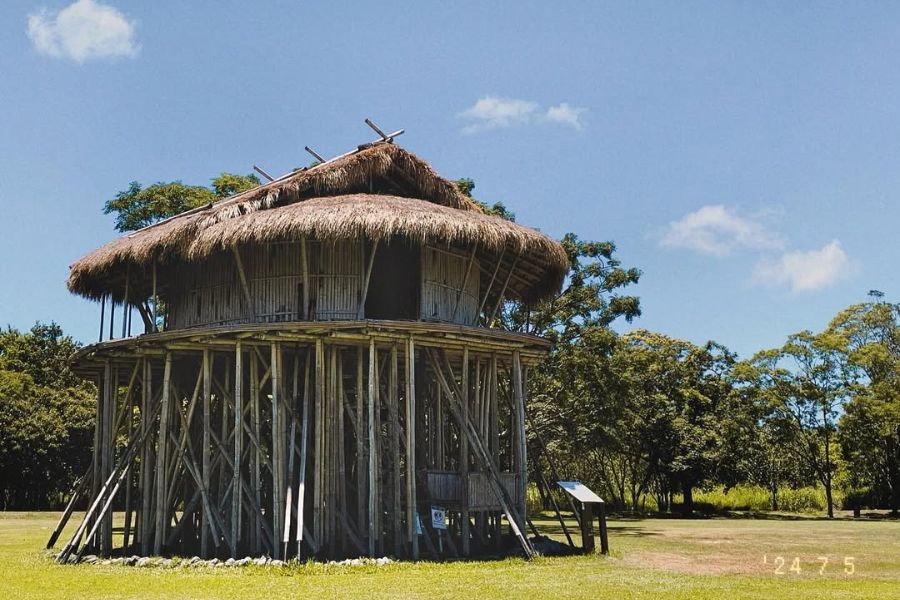
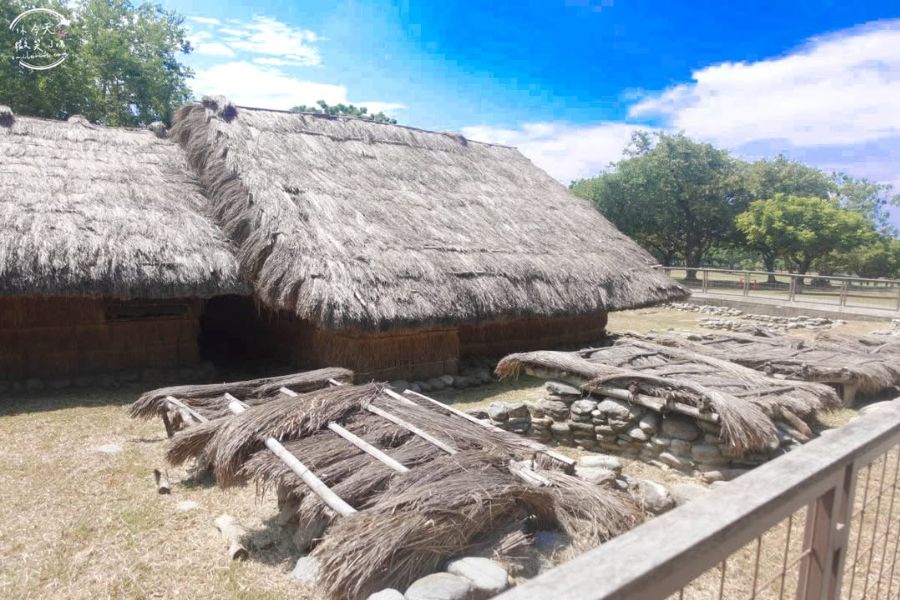
Archaeological findings show that the Beinan Site was not merely a burial ground but a long-term living environment. Excavations revealed a well-organized settlement layout, with rows of dwellings built close together. Stone-enclosed areas behind the houses are believed to have served as food storage spaces, while some structures even featured stone steps to facilitate movement across changes in elevation.
These discoveries indicate that around 3,500 years ago, the people of the Beinan Culture already possessed sophisticated spatial planning abilities, systematically organizing residential, storage, and burial areas to preserve family memories upon this land.
(Photo credit: @tc_adventure.0316)
The Enigmatic Orientation of the Stone Pillars
Scholars during the Japanese colonial period recorded the presence of multiple stone pillars at the Beinan Site, ranging from 1.8 to 4.55 meters in height. Today, only the Moon-shaped Stone Pillar remains standing. Field investigations and comparisons with historical photographs have identified four remaining pillar bases. Remarkably, the broader faces of these pillars are aligned at approximately 30 degrees east of true north—differing by only one degree from the Moon-shaped Pillar itself. Considering that these pillars were erected nearly three millennia ago without modern instruments, such precision in orientation is nothing short of astonishing.
(Photo credit: @f091451)
(Photo credit: @smilevivi_today )
The Mystery of Transporting Megaliths Across the Mountains
The Moon-shaped Stone Pillar is made of slate, a fine-grained, gray-black metamorphic rock that does not occur naturally at the Beinan Site. Geological studies suggest that the nearest slate source lies on the eastern flank of the Central Mountain Range, at least five kilometers away. How prehistoric people transported stones weighing hundreds of kilograms—or even over a ton—remains an open question.
One hypothesis proposes that the stones were collected from upstream layers of the Beinan River and transported downstream by water, though no definitive conclusion has yet been reached. Regardless of the method, such an undertaking would have required significant labor mobilization and social organization, underscoring the special significance these stone pillars must have held for the community.
(Photo credit: @tc_adventure.0316)
A Thousand-Year Gaze Awaiting Interpretation
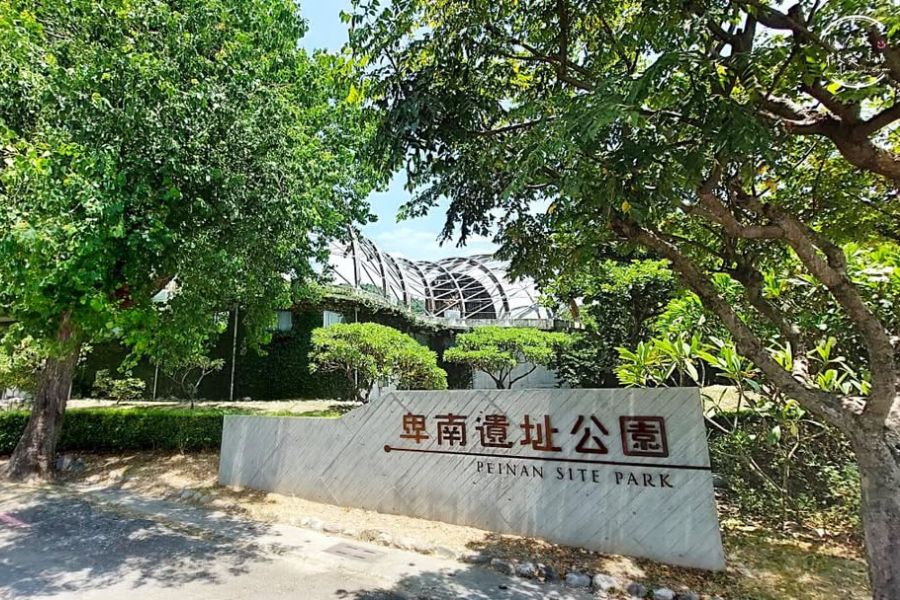
Established by the Taitung County Government, the Beinan Archaeological Park allows modern visitors to step into an authentic archaeological landscape. Through the Moon-shaped Stone Pillar still standing at its original site, visitors can trace the daily lives of prehistoric communities. More than a national monument, the pillar has also been incorporated into the design of Taitung County’s emblem, symbolizing the region’s unique cultural heritage—quietly awaiting new generations of explorers to uncover its stories.
(Photo credit: @smilevivi_today )
(Photo credit: @smilevivi_today)
