


 |
| A TREASURE TROVE OF SUSTAINABILITY IN TAITUNG: WHERE KNOWLEDGE IS WEALTH |
|
While the world rushes to find answers for coexisting with nature, Taitung has long been crafting its own response on this pristine land between mountains and sea, moving at its own pace. In 2026, we place "sustainability" at the core as we reimagine the vitality of this city — from low-carbon transportation networks to the creative reuse of discarded resources to the social mobility brought by digital nomads and corporate retreats. This series of articles invites you to see how Taitung transforms "slow" into resilience that protects the land, turning every event, every journey, and even every policy into a way of caring for this land. Join us as we discover how this city treads lightly toward a sustainable future in harmony with the planet. THE REBIRTH OF PUBLIC SPACE
AMID MOUNTAIN MISTS 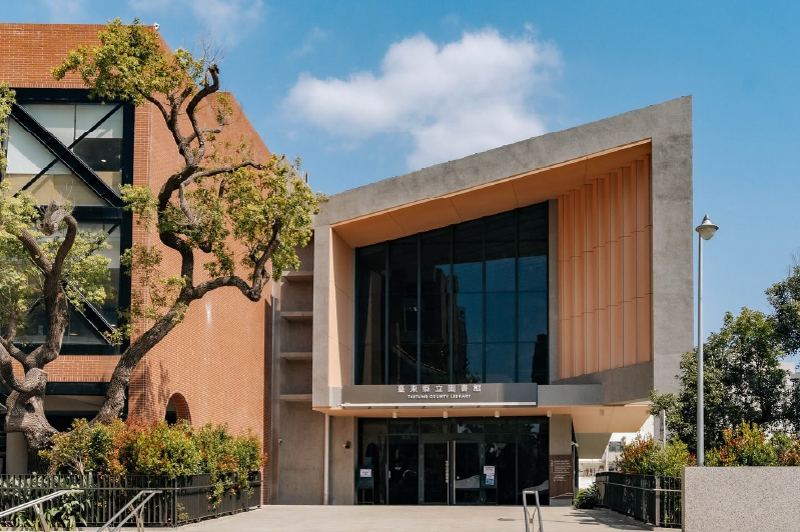 The reopening and transformation of the Taitung County Library embody a profound commitment to cultural sustainability and environmental harmony in public architecture. This major public project—which underwent 14 years of meticulous planning and design and faced multiple unsuccessful bidding rounds—was coordinated by Shu Chang & associates, architects. Centered on the overarching design concepts of “mountain mist” and “a mountain within the city,” it skillfully transforms the undulating natural landscape of the east coast into a unique urban architecture. The building’s continuous sloping facades and pitched roofs not only mirror and engage with Taitung’s actual mountain skyline but also intentionally step back at the main entrance, fully preserving and revealing the iconic red-brick wall of the old library—designed 40 years ago by architect Wu Ming-Hsiu. This design, which seamlessly integrates the old and new wings, expresses a deep respect for local historical memory and the urban cultural fabric, successfully achieving the goal of cultural sustainability through the coexistence of traditional architectural heritage and modern public space. In terms of spatial layout, the new wing connects the front green space and cultural plaza through deep, extended eaves and semi-outdoor corridors. Wooden louvers are skillfully arranged on the east-facing facade to mitigate Taitung’s scorching tropical climate. This green building approach, which adapts to the natural environment, significantly reduces the use of air conditioning and artificial lighting, providing readers with a more comfortable reading environment. With a total investment of NT$830 million, the library not only enhances the functionality and aesthetic appeal of public spaces but also breathes new life into the historical assets of the old building within a modern architectural framework, leaving Taitung with a new cultural landmark that combines historical depth with environmental sustainability. ROOTED IN LOCAL HISTORY AND KNOWLEDGE
TRANSMISSION:THE IMMERSIVE CULTURAL CONTEXT OF THE DISCOVER CENTER OF TAITUNG 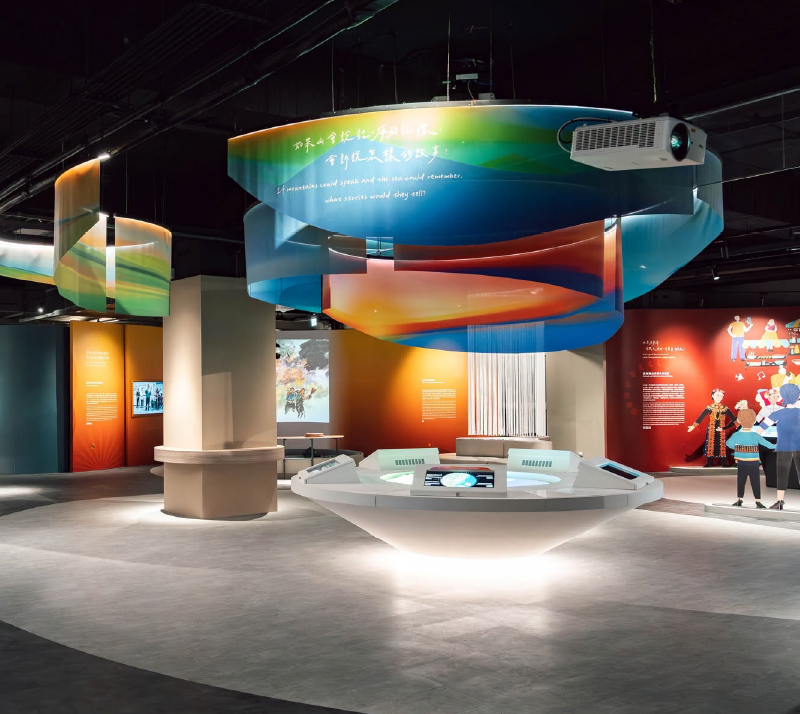 The key to achieving cultural sustainability lies in preserving local historical memory and transmitting knowledge across generations. On the first floor of its new building, the Taitung County Library has established the “Discover Center Of Taitung,” a space covering approximately 694 square meters that was meticulously planned by the county government and serves as the library’s most distinctive cultural hub and a three-dimensional “gateway to knowledge.” This “micro-museum,” which combines educational significance with cultural warmth, plays a key role in preserving local culture and advancing the vision of Taitung as the homeland of Austronesian culture. The museum is systematically divided into eight major thematic exhibition areas: “Exploring Taitung,” “Time and Space,” “Literature,” “Music,” “Art,” “Rituals and Festivals,” “Religion,” and “Sports.” It integrates Taitung’s history spanning 30,000 years, the diverse beliefs of its indigenous groups, traditional rituals, and local folklore into rich multimedia interactive installations and immersive spatial experiences. For example, one exhibit projects historical developments onto a “river of time” on the floor, presents local Taitung stories through ink-wash animations, features a musical installation where visitors can hear melodies simply by blowing into it, and uses a sand table to illustrate the evolution of local art. Visitors can even experience the glory of traditional festivals and athletic achievements firsthand within the themed zones. This engaging and highly entertaining form of knowledge transmission—which combines dynamic and static elements—breaks down the barriers of traditional static displays. Whether they are lifelong residents or first-time visitors, all can personally experience the deep connection between people and the land during a visit lasting anywhere from 30 minutes to 3 hours. Through vivid, immersive storytelling, the Discover Center Of Taitung helps preserve and pass down the local cultural knowledge accumulated over generations within a public learning space, forming an indispensable cultural asset for sustainable development. The "Art of Slow Living" zone brings together local brands and grassroots practice, using objects and spatial storytelling to show how Taitung folds its distinctive values into local industry. On the social side, the venue offers an open public ground: visitors pick up a practice workbook and throw themselves into everyday exercises such as weaving, swinging a bat, or simply spacing out, recovering the rhythm of life and building cultural identity. This shared learning strengthens community ties and gathers a collective imagination for the city's future. Through this people-centered participation, the Expo aims to build a recognizable city brand, so that Taitung's values can be understood and cherished by more people, advancing a vision of local development that is both inclusive and sustainable. SMART BOOK KIOSKS BRING EQUAL
ACCESS TO EVERY GENERATION 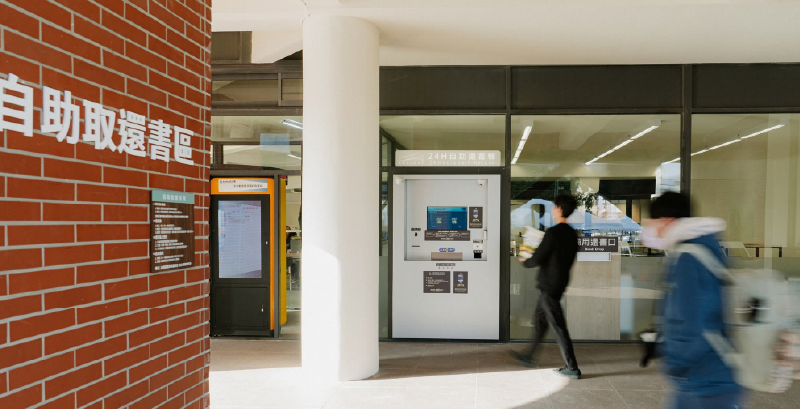 The core value of social sustainability lies in providing a fair, inclusive, and barrier-free public learning environment, thereby safeguarding the rights of all community members to equal access to information and knowledge and realizing the ideal of equal access to knowledge. The Taitung County Library has fully incorporated the concept of “shared access for all ages” into its interior design, creating diverse, dedicated spaces for readers of different ages and with varying learning needs. In particular, the library has designated a parent-child reading area covering approximately 562 square meters specifically for children under 12. Centered on play-based reading, the design features undulating hill-like landscapes, valley-shaped bookshelves, and a ceiling evoking a starry sky, creating a reading atmosphere brimming with the joy of exploration. The area is equipped with “Little Elf” self-service book checkout machines, specifically designed for children’s height and usage habits. These machines guide children to operate automated equipment independently to complete the book borrowing and return process, fostering their ability to learn autonomously and make effective use of public resources from an early age. In addition to the family reading area, the library features a high-ceilinged teen reading area and manga section, with 24 computer terminals and a complete collection of popular manga series, a senior citizens’ periodicals section, a multimedia audiovisual area, and a self-study room with 98 seats that utilizes electronic seat cards and a two-stage access control system. The introduction of these smart devices and age-inclusive, barrier-free facilities has effectively eliminated the learning barriers caused by differences in age and the digital divide, ensuring that young children, adolescents, seniors, and the general public can equally access public knowledge resources, thereby laying a solid and inclusive humanistic foundation for the sustainable development of society. REVITALIZING THE STACKS: MODERN MANAGEMENT
FOR BETTER BOOK CIRCULATION 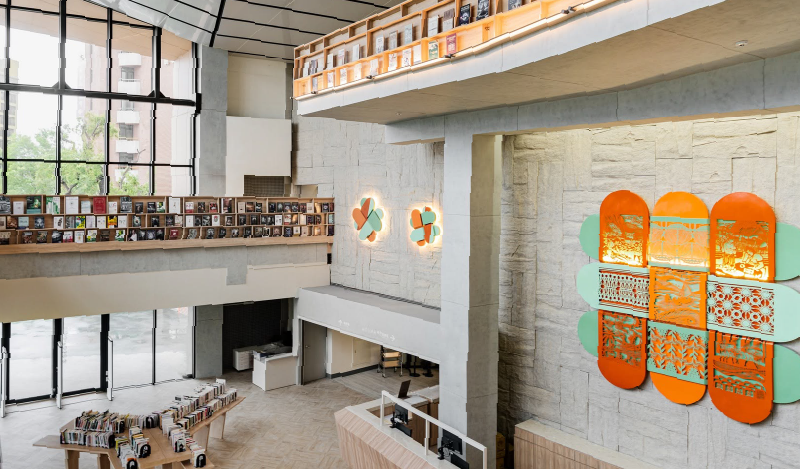 The efficient circulation and reuse of public library resources are vital practices that embody resource sustainability, optimal utilization, and equal access to knowledge. Since the Taitung County Library reopened, it has fostered an incredibly vibrant local reading culture, with monthly circulation surging to nearly 20,000 books. During its trial operation period, the library attracted over 70,000 visitors and issued 2,000 new library cards. To ensure that public library collections circulate smoothly within the community without stagnation, the library has established a comprehensive, systematic borrowing and overdue reminder management mechanism. This includes proactively sending text message reminders three days before a book’s due date, providing a three-day grace period for overdue items without fines, and implementing clear policies for cumulative suspension of borrowing privileges and compensation for lost items. To address the 10,000 overdue books that had accumulated over the library’s 40-plus-year history, the library launched a proactive and compassionate “Bringing Books Home” initiative, which involves individual phone reminders to help readers resolve overdue issues and restore their borrowing privileges, thereby returning these valuable public library resources to the shelves where they can serve the community once again. In addition, the Taitung County Cultural Affairs Department continues to review and optimize interlibrary loan operations and book transfer processes among township libraries. By reducing waiting times for cross-district book searches, training librarians, and expediting the professional weeding and inventory of outdated or damaged books, the department comprehensively enhances the operational efficiency of public resources. This management innovation, which emphasizes resource circulation and cross-district access, ensures that readers in both rural and urban areas can equitably and seamlessly share public collections, thereby maximizing the value of sustainable knowledge circulation. CO-CREATING THE FUTURE: SUSTAINABLE GROWTH
THROUGH CROSS-REGIONAL NETWORKS 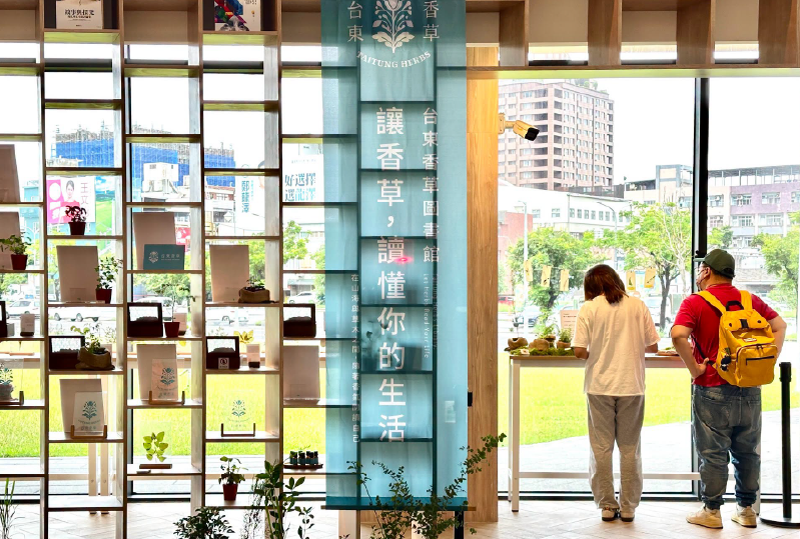 For modern public libraries to achieve sustainable development, they must not merely serve as static repositories for books but must evolve into hubs that closely unite local communities and expand cultural exchange. The Taitung County Library has adopted a sustainable promotion strategy of “attracting visitors to the library and fostering reading through daily life,” using a rich and diverse array of exhibitions and community activities to integrate reading into the daily lives of citizens. For example, during the 2026 Taitung Expo, the library hosted the “Co-Editing TAITUNG” themed exhibition, bringing together nine groups of local creators and nine groups of out-of-town creators. Through correspondence, field research, and the exchange of materials, they engaged in cross-regional cultural dialogue. This initiative, together with the “Cast Off!” market, attracted over 10,000 visitors to the exhibition spaces on the second through fourth floors of the library. The library also hosted the “Reading Life Market” and the “Taitung Herb Library” themed exhibitions, deeply interweaving the local herb industry, food and agriculture education, cultural and creative crafts, musical performances, and book recommendations to guide the public in rediscovering the relationship between reading and the land through sensory experiences. The library has not only effectively connected regional resources across townships with surrounding arts and cultural venues but has also built a bridge between local culture and international perspectives. This network of community connections—forged through local co-creation, intergenerational participation, and lived experiences—has transformed the Taitung County Library into a dynamic hub that continuously drives local cultural innovation and sustainable development. |
| © TAITUNG COUNTY GOVERNMENT 2026 |

【Scheduled Maintenance Notice】
Our website and system services will be temporarily unavailable due to power inspection and network equipment maintenance.
Date & Time:
Sat, Oct 17, 08:30–13:00 (GMT+8)
Services will be restored gradually after maintenance is completed.
We apologize for any inconvenience.
