


Elders of the Dulan tribe say the Amis people are a people who “listen to the sea.” By listening to the sound of waves striking the reef, they can read the weather, and even sense whether a typhoon may be approaching. Before going out to sea, they also observe with their eyes. Dulan Mountain is a guidepost for entering the water. When the peak is clear during the day, the seawater is more likely to be clear as well. If there are more impurities in the water, visibility will be lower. In this stretch of ocean affectionately called the “Pacific Fresh Food Market” by the community, the skills of living from the sea are not divided by gender. Everyone must learn how to move forward when the timing is right, and how to retreat when the sea says no.
(Photo credit: Slow Food Taitung)
(Photo credit: Slow Food Taitung)
When Seawater Turns Cloudy
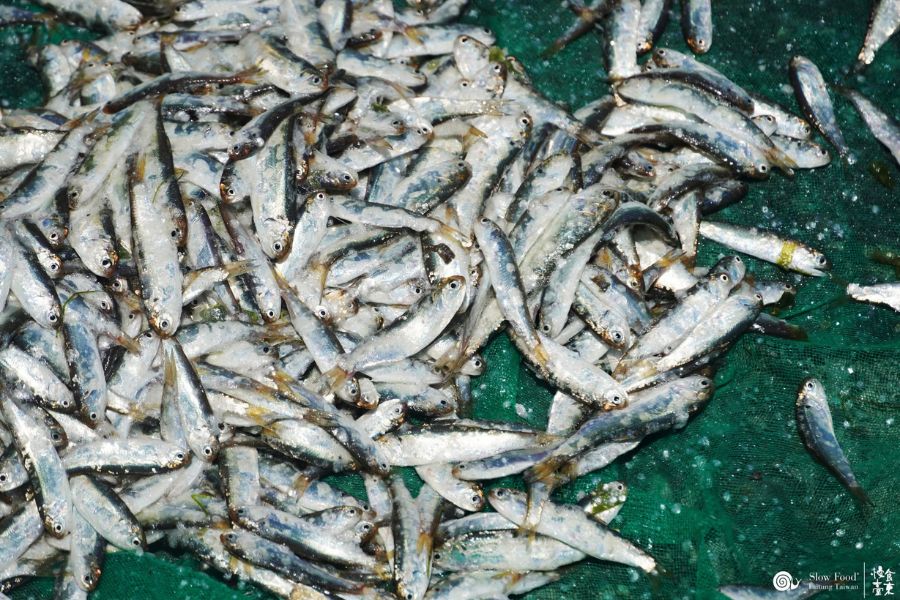
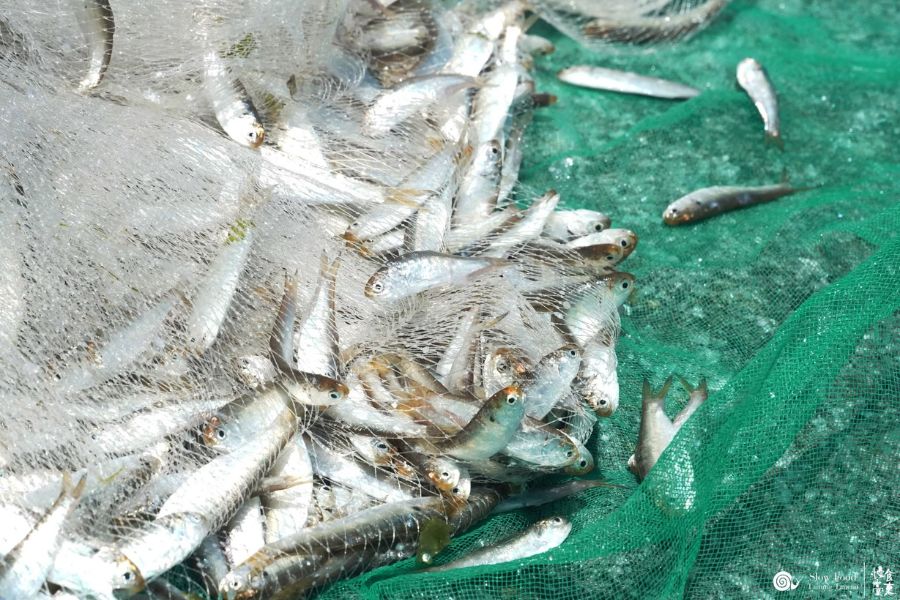
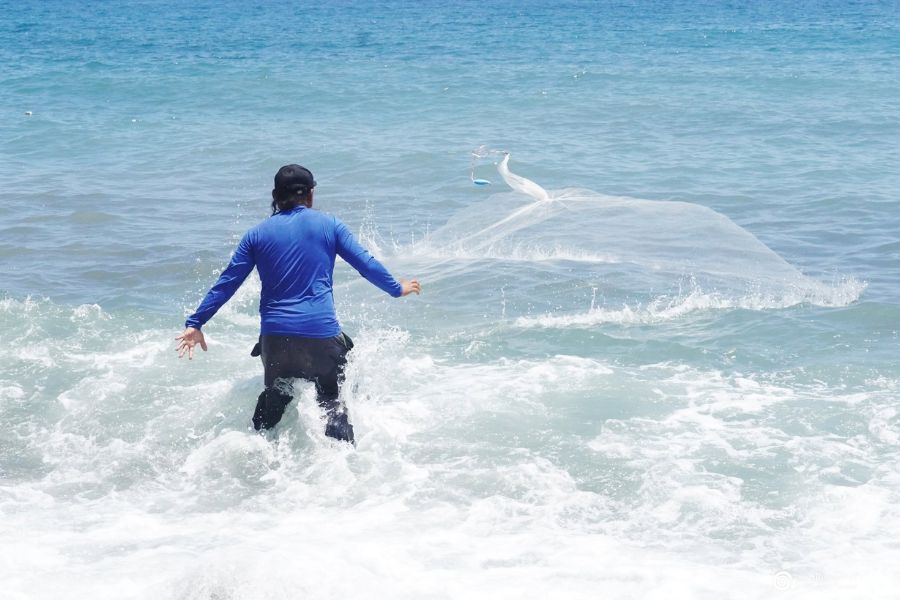
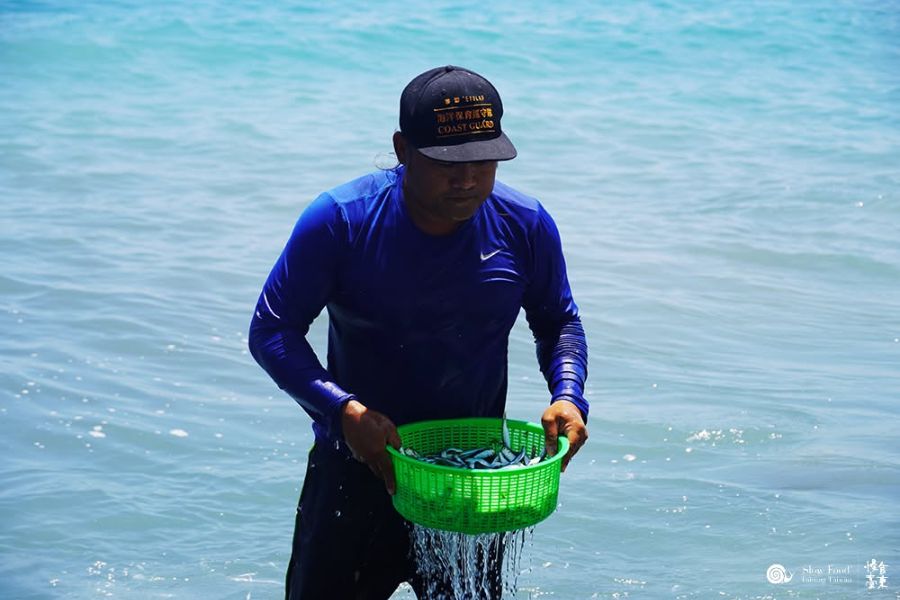
Interestingly, cloudy seawater is actually the best time to cast a net. The community calls the moment when the tide shifts and the current stirs up fine stones, turning the water cloudy, masi’ac. This is the ideal time for tafokod, or cast-net fishing. Every year from April to July, migratory codlet, known in the Amis language as lalaw, appears along the east coast. On early summer nights, a few headlamps can often be seen flickering on the sea along Provincial Highway 11. Those are sea hunters practicing milakelaw, using light at night to spot fish.
The cloudy patches change every day. A stretch of murky water that was far from shore a few days ago may, several days later, be only a few steps from land. In the Amis language, “mi” carries the meaning of actively going out to do something. Gathering is never simply a matter of wanting and taking. More often, the sea has to be willing to give, and you just happen to be there when it does.
Salt Is the First Step After Landing
There is a technique to casting the net. You have to read the direction, cast at the right moment, and let go cleanly. To avoid larger fish, codlet swim into cloudy water, so the net has to be cast against the movement of the current to catch them. This fish is only about 6 to 10 centimeters long. The fins below its jaw extend like fine threads, and its scales fall off at the slightest touch. Even after being caught in the net, it still struggles hard to escape. That is the instinct of a living creature trying to survive.
(Photo credit: Slow Food Taitung)
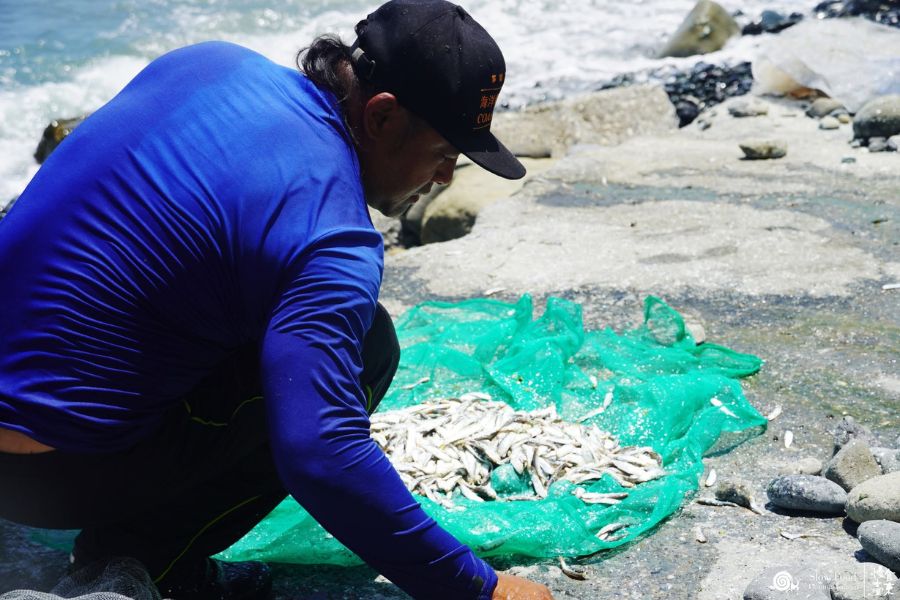
Once the catch is brought ashore, the first step is pacina. The word cina means salt. The fish are quickly covered with salt to firm up the flesh, then rinsed with seawater and placed in an icebox. Without this step, the fish spoil and develop an odor very quickly. Salting is almost a race against time.
(Photo credit: Slow Food Taitung)
Many Ways to Eat One Small Fish
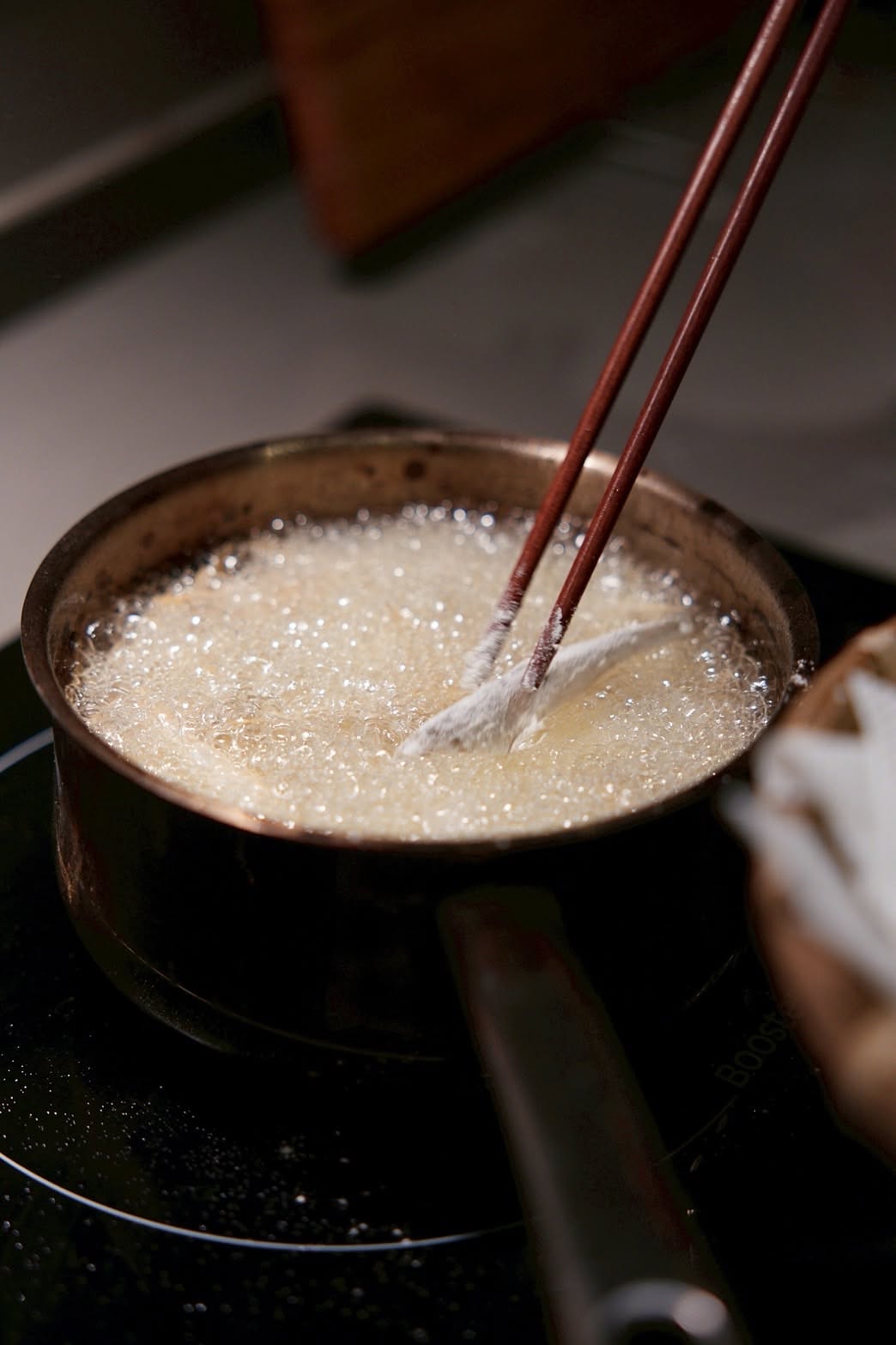
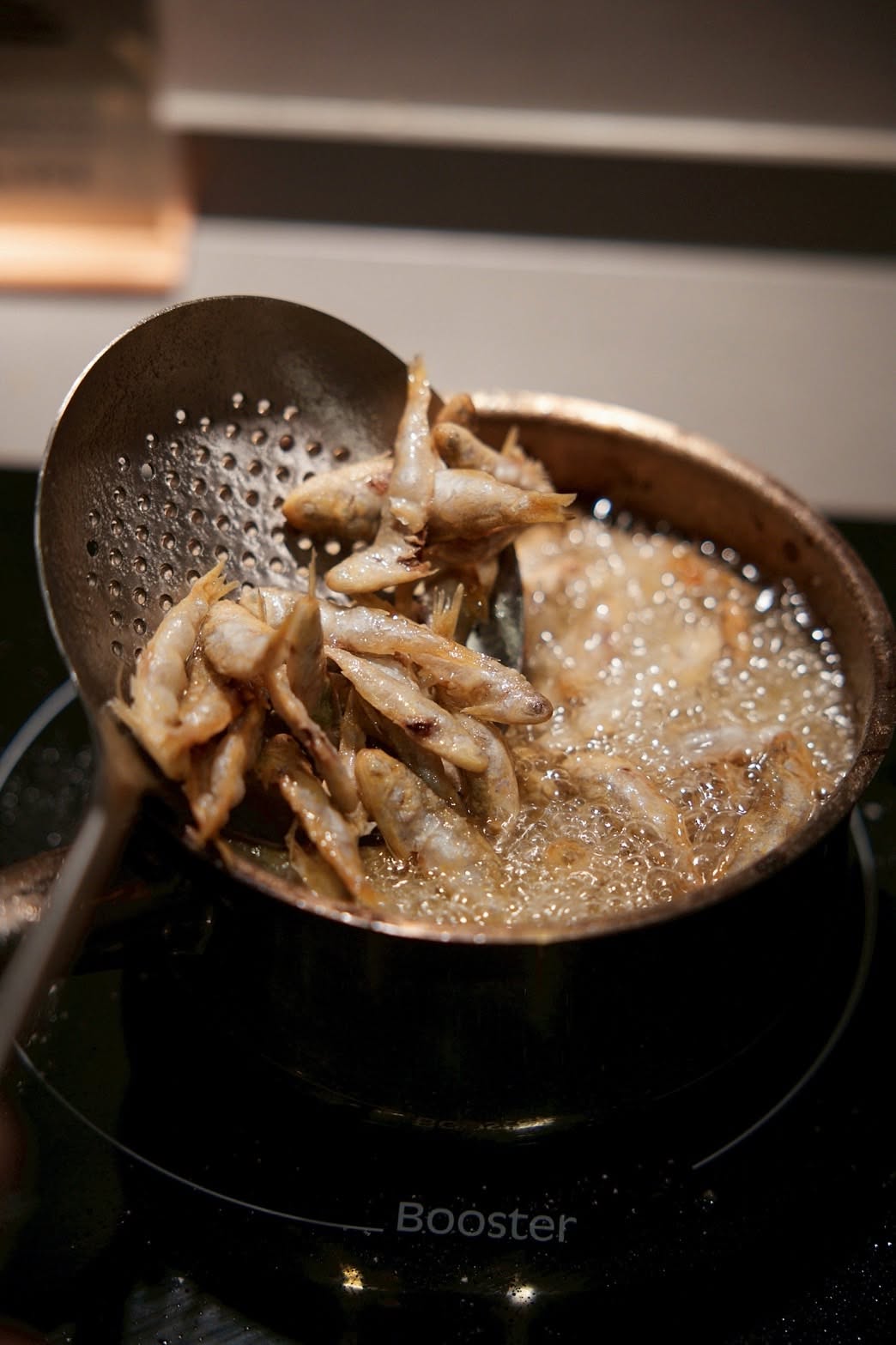
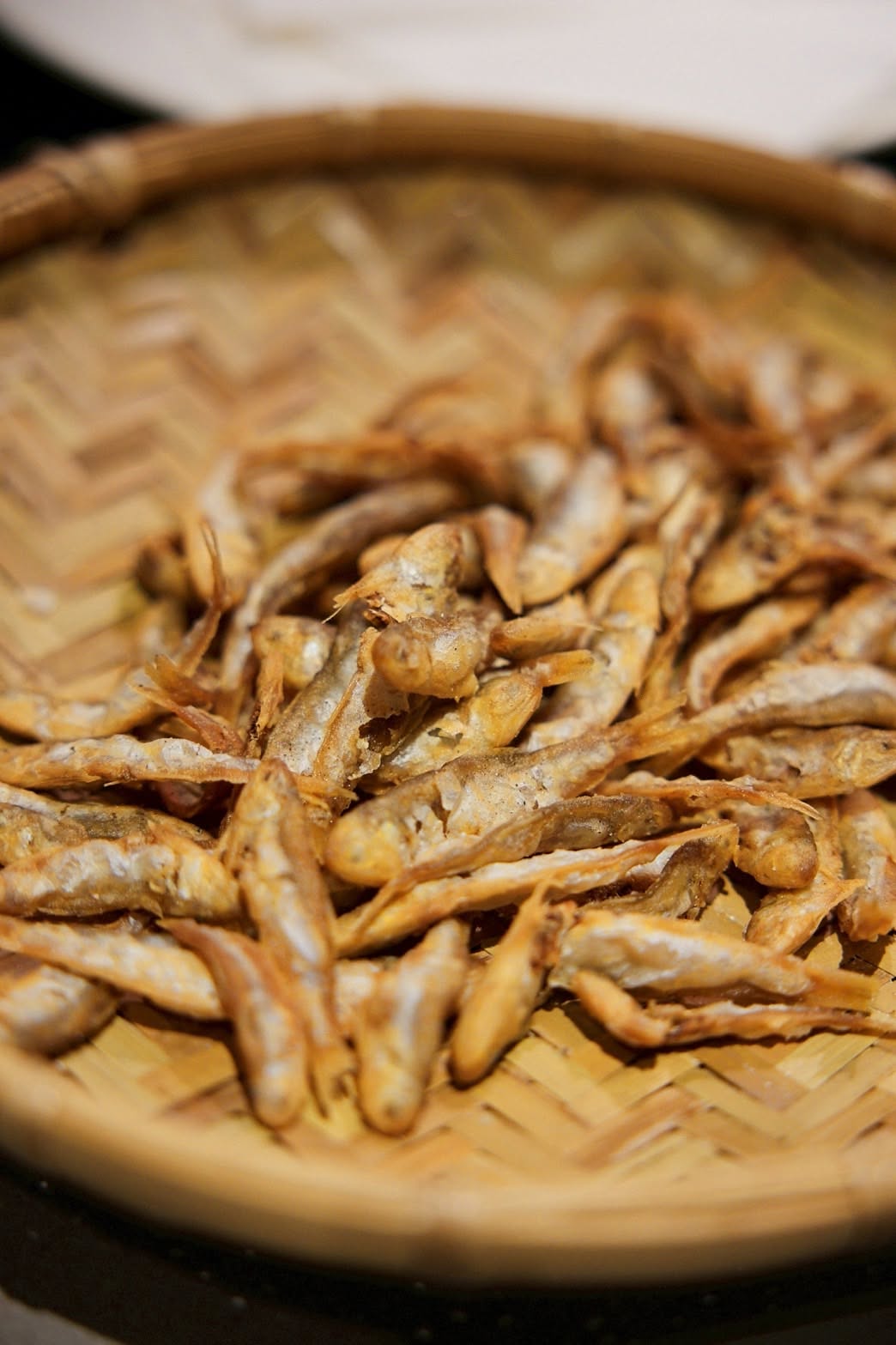
When properly handled, codlet can be enjoyed in many ways. Freshly caught fish can be made into sasiraw, a salted or marinated preparation for longer preservation. They can also be sliced into sasimi and eaten raw to enjoy their natural sweetness. For a cooked version, they are deep-fried at around 170 degrees Celsius. Crispy on the outside and tender inside, they are easy to eat one after another, especially with a chilled sparkling drink. From casting the net and salting the fish to serving it at the table, this small seasonal fish connects the food culture of the community with its way of living alongside the sea.
Knowing When It’s Enough
Rather than catching as much as possible, the community cares more about taking just enough. There is a saying passed down in the tribe: “When it is enough, it is enough.” The amount you can take from the sea has already been arranged by the heavens. It is enough if it can feed the family and be shared with others in the community. No matter how much more you catch, you cannot take it all with you. What remains should be left to the sea.
That is why, before entering the fishing grounds, they never set a fixed target or number for the catch. Instead, they consult nature. Knowledge accumulated through long observation becomes wisdom passed down through generations. Only when the season arrives can food be gathered. This attitude of gathering in moderation, sharing generously, and respecting the cycle of nature is also the most moving foundation of the slow food spirit that the Taitung County Government has actively promoted in recent years.
(Photo credit: Slow Food Taitung)
2026 Taitung Slow Food Festival
Super Slow Table
Event Site │ Taitung Old Railway District
Event Date │ July 4–5, 15:00–21:00
The Taitung Slow Food Festival embodies a lifestyle rhythm that harmonizes with nature, cherishes resources, and preserves local culture and traditions. It reshapes urban and rural development in line with global environmental and sustainability trends. This celebration is not just an annual event but also a catalyst for cultural progress, driving ecological changes across Taiwan and showcasing Taiwan’s commitment and creativity in sustainable development to the world.
