


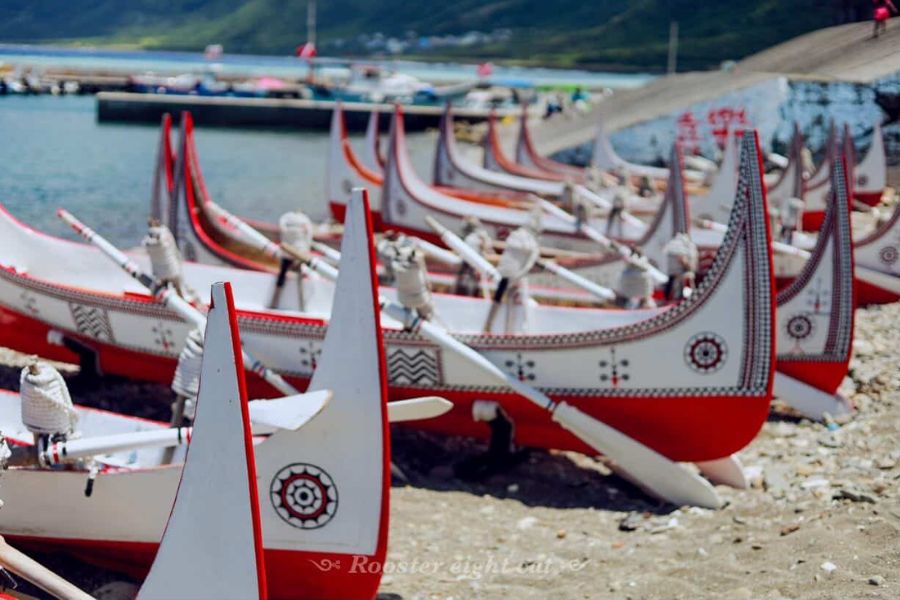
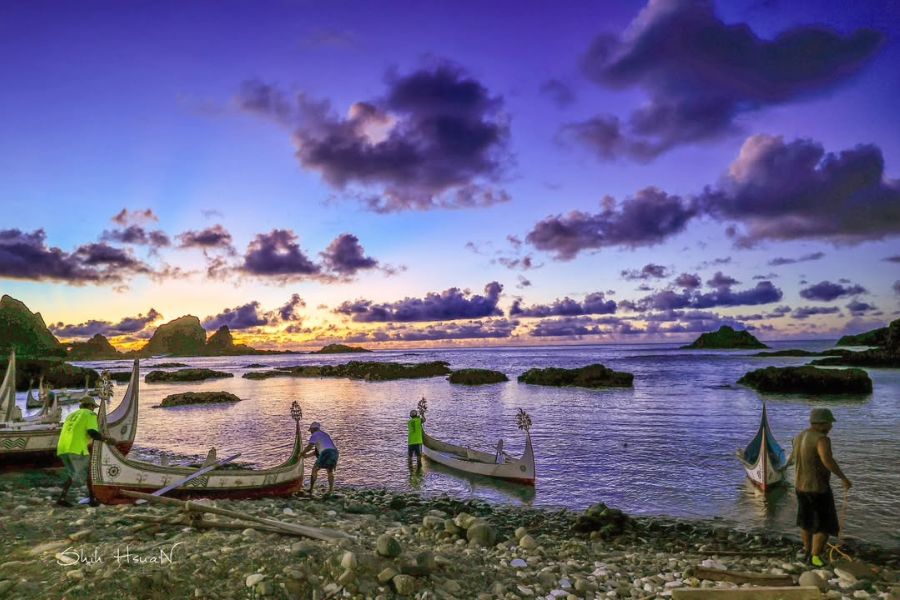
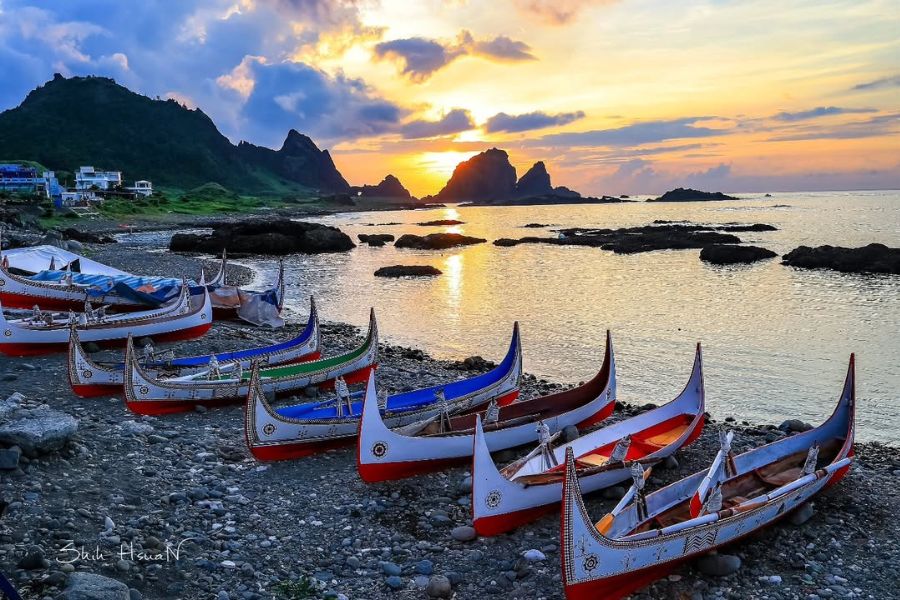
Along the coastline of Lanyu in Taitung County, the plank boats built by the Tao people across generations remain one of the most valuable living legacies of Austronesian seafaring culture. These boats are categorized by purpose: the small Tatala and the large Chinurikuran. The smaller boats carry one to three people, while the larger vessels can hold six to ten, constructed from 21 and 27 wooden planks respectively. Remarkably, the entire boat is assembled without a single metal nail. Instead, wooden pegs, joinery techniques, and natural resins are used throughout. Each plank is carefully selected based on its position and function within the structure, reflecting a deep understanding of both material and environment.
(Photo credit: @cat19800616)
(Photo credit: @shih_hsuan6260)
From Forest to Ocean: A Botanical Knowledge System
Boat building begins in the forest, where the selection of timber already reveals the Tao people’s refined ecological knowledge. The keel must endure constant seawater exposure and friction against rocks, requiring dense, durable, and warp-resistant wood. In contrast, the side planks rely on lighter, softer woods with broad buttress roots to maintain buoyancy and balance.
Lanyu’s unique flora, shaped by influences from Taiwan, the Ryukyu Islands, and the Philippines, provides a diverse range of materials. Every stage, from shaping each plank to assembling the hull, reflects careful consideration of wood properties. Even the final contours of the boat demonstrate a sophisticated blend of craftsmanship and environmental knowledge. Boat building typically begins in November or December and takes three to five months to complete.
(Photo credit: @shih_hsuan6260)
A Language of Belief in Red, Black, and White
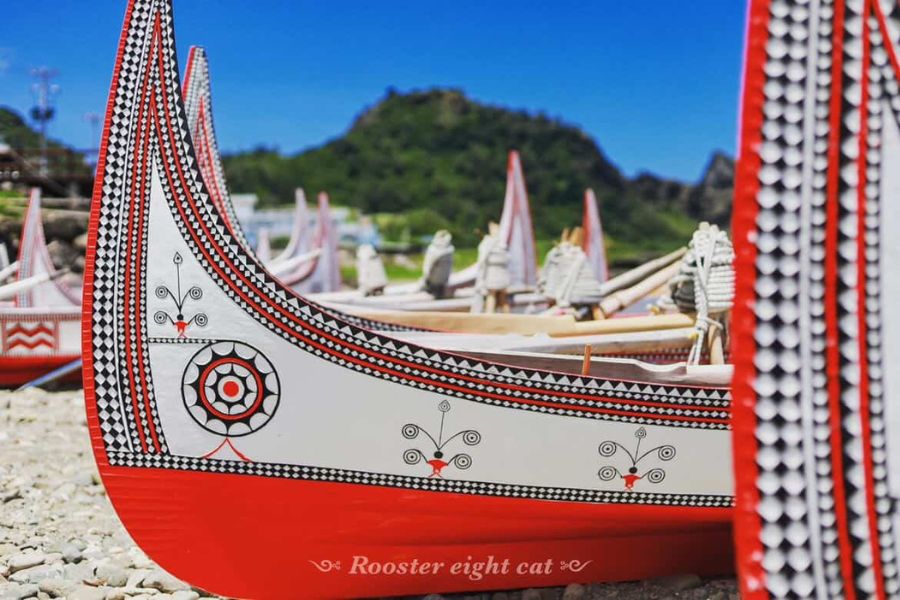
The boats are painted in red, white, and black, with each pattern following strict traditions and carrying symbolic meaning. The “eyes of the boat,” carved at both bow and stern, are composed of concentric circles with radiating patterns symbolizing protection, guidance, and good fortune.
Human figures carved onto the boat represent ancestral heroes and serve as family emblems, with distinct variations across clans and villages. Wave patterns run along the sides of the vessel, inspired by the motion of the sea and also believed to ward off evil. The Taitung County Government has officially registered the Tao large boat launching ceremony as an important folk cultural heritage, affirming its traditional, local, and representative significance.
(Photo credit: @cat19800616)
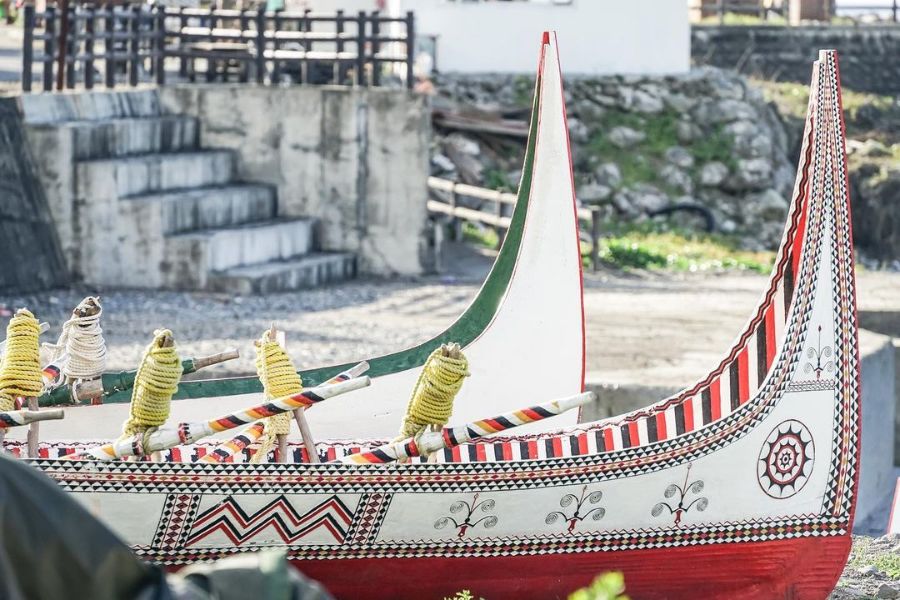
(Photo credit: 思旅thinkingtravel)
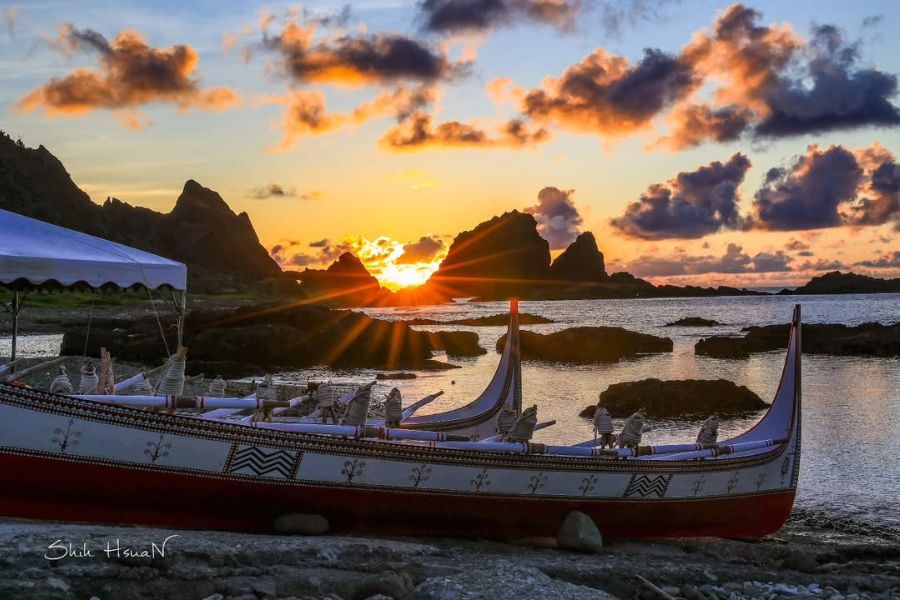
(Photo credit: @shih_hsuan6260)
When the Boat Breathes with the Community
Plank boats are not merely tools for livelihood; they are deeply tied to the Flying Fish Festival and the organization of fishing groups, forming the core of Tao cultural life. Large boats are used collectively by fishing groups, whose members participate in every stage—from construction and ritual preparation to the four-month fishing season.
During the fish-calling ritual, families push their boats onto the shore while the captain offers sacrifices to pray for a successful harvest. The completion ceremony of a large boat is a major communal event, involving taro harvesting, inviting guests, all-night celebratory songs, and the dramatic boat-tossing ritual. The entire process can last around ten days.
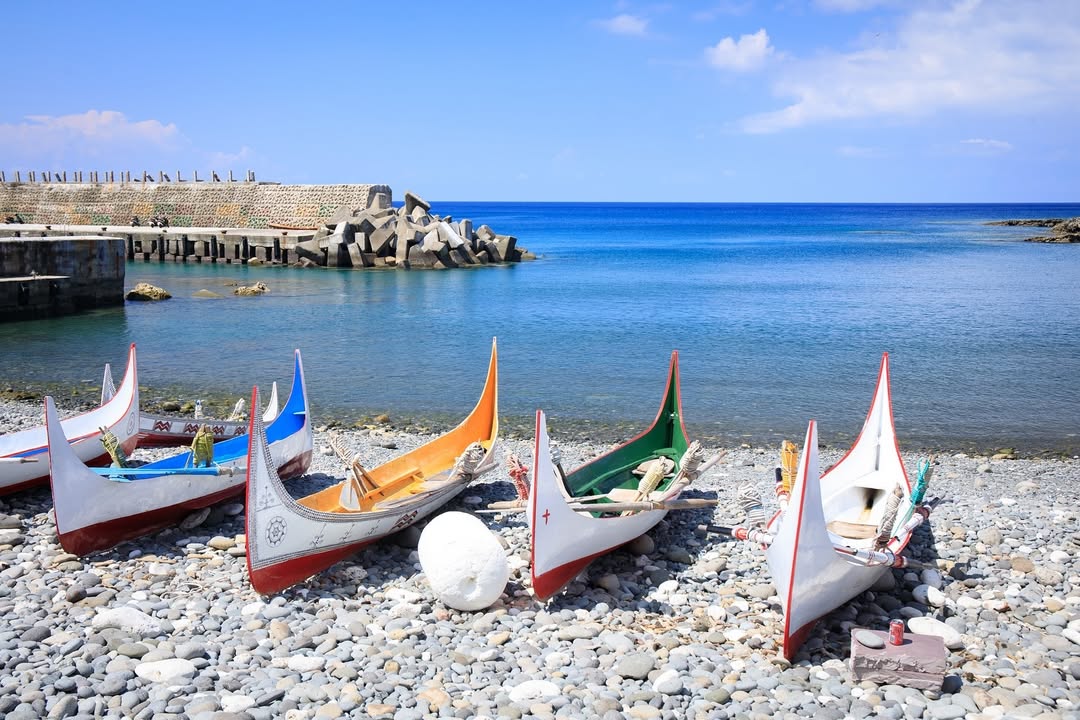
(Photo credit: @weichang_wu)
Eternal Blessings in the Boat-Tossing Ritual
The highlight of the completion ceremony lies in the rituals of Manwaway and Mapatotalaw. Men of the community form groups by age, surrounding the new boat as they chant in unison and toss it into the air. Standing atop the vessel, the captain performs symbolic gestures to ward off evil, creating a powerful and unforgettable atmosphere. During the trial voyage, the strongest men of the community row the boat first, circling once before handing it over to the fishing group to test its speed. Finally, the captain’s wife, dressed in ceremonial attire, presents blessed millet, symbolizing lasting fortune for the fishing group. Carrying both human and spiritual significance, the plank boat is then launched into the ocean, continuing the Tao people’s enduring connection with flying fish, the sea, and the rhythms of nature.
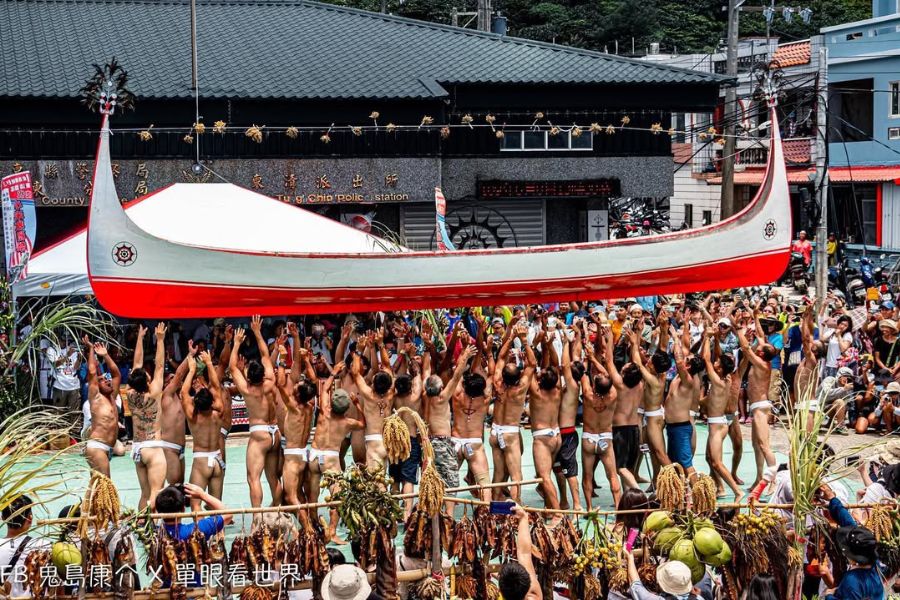
(Photo credit: @zelda60233)