


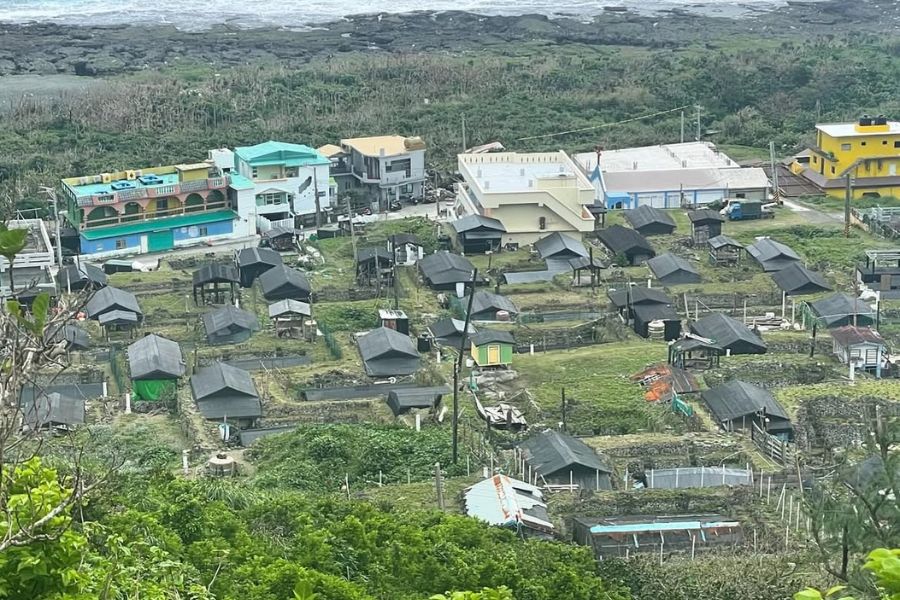
Forty-nine nautical miles off the coast of Taitung lies Lanyu, rising from the waves. Once known as Hongtou Island, in 1947 the white moth orchids blanketing its mountains gave it this fragrant new name — Orchid Island. The island is only 45 square kilometers in size, but its weather is unforgiving. From May to September, the sun is so intense that it is hard to keep one’s eyes open. Average annual humidity reaches 90 percent, clinging to the skin, while typhoons arrive one after another from April through October. After October, strong northeast monsoon winds take over and blow throughout the day and night. Faced with these conditions, the Tao people did not try to fight against nature. Instead, they dug their homes into the ground and built semi-subterranean houses that stay cool in summer and warm in winter, learning to live in balance with the mountains and sea.
(Photo credit: @waranihon)
(Photo credit: 莊志維 @chuang_chihwei)
What a Traditional Household Looks Like
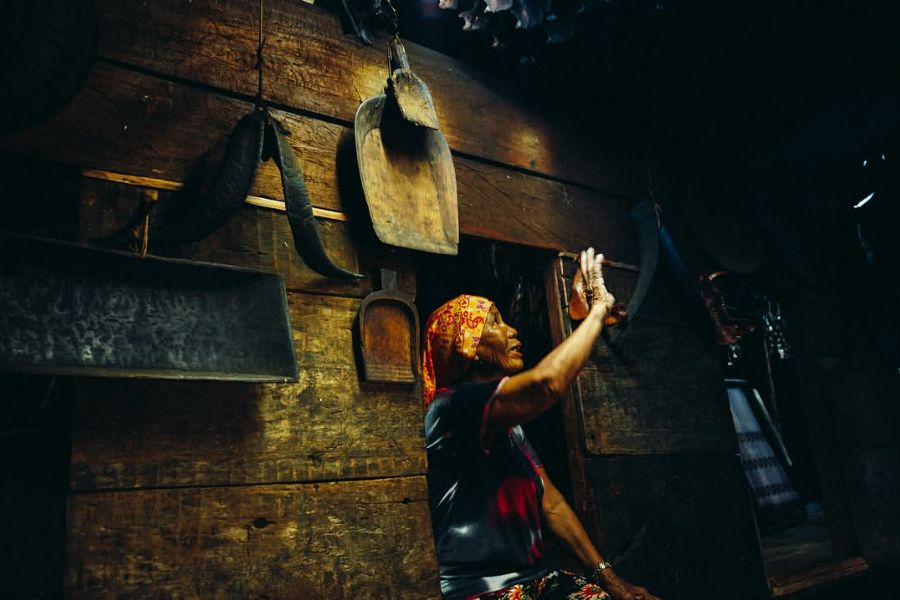
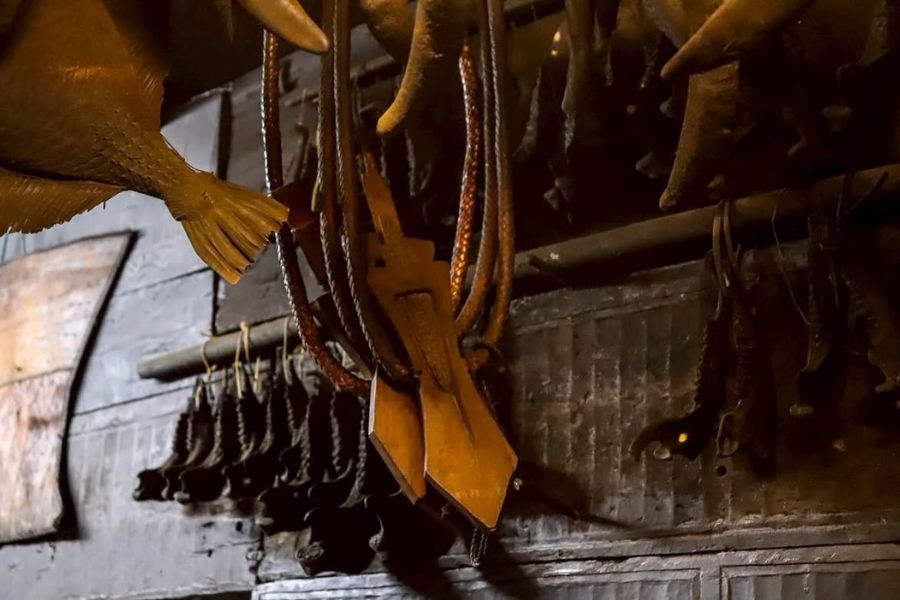
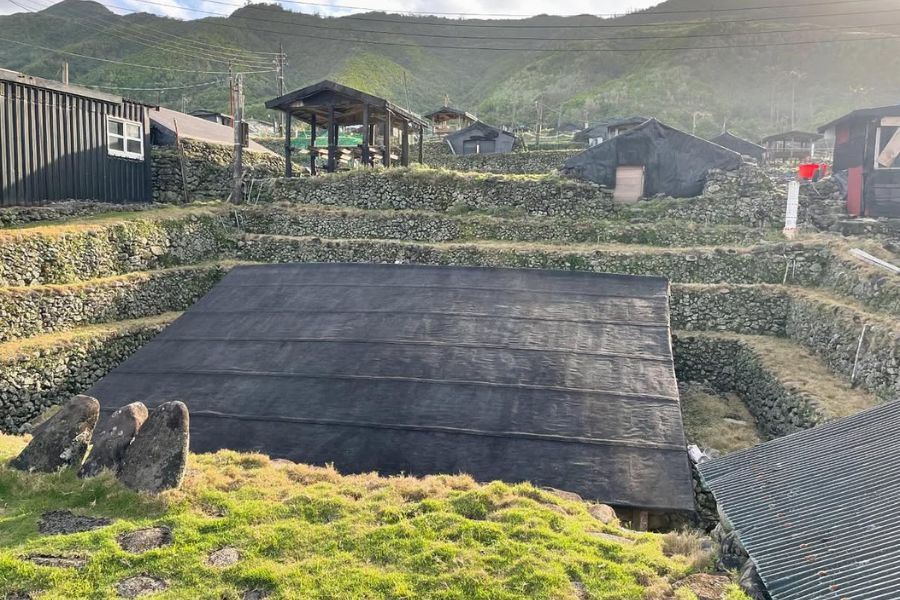
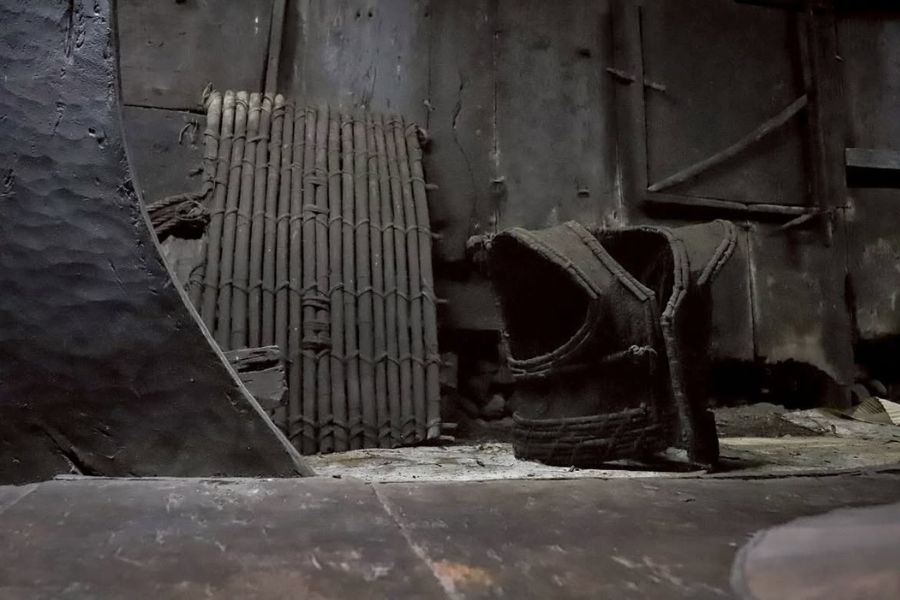
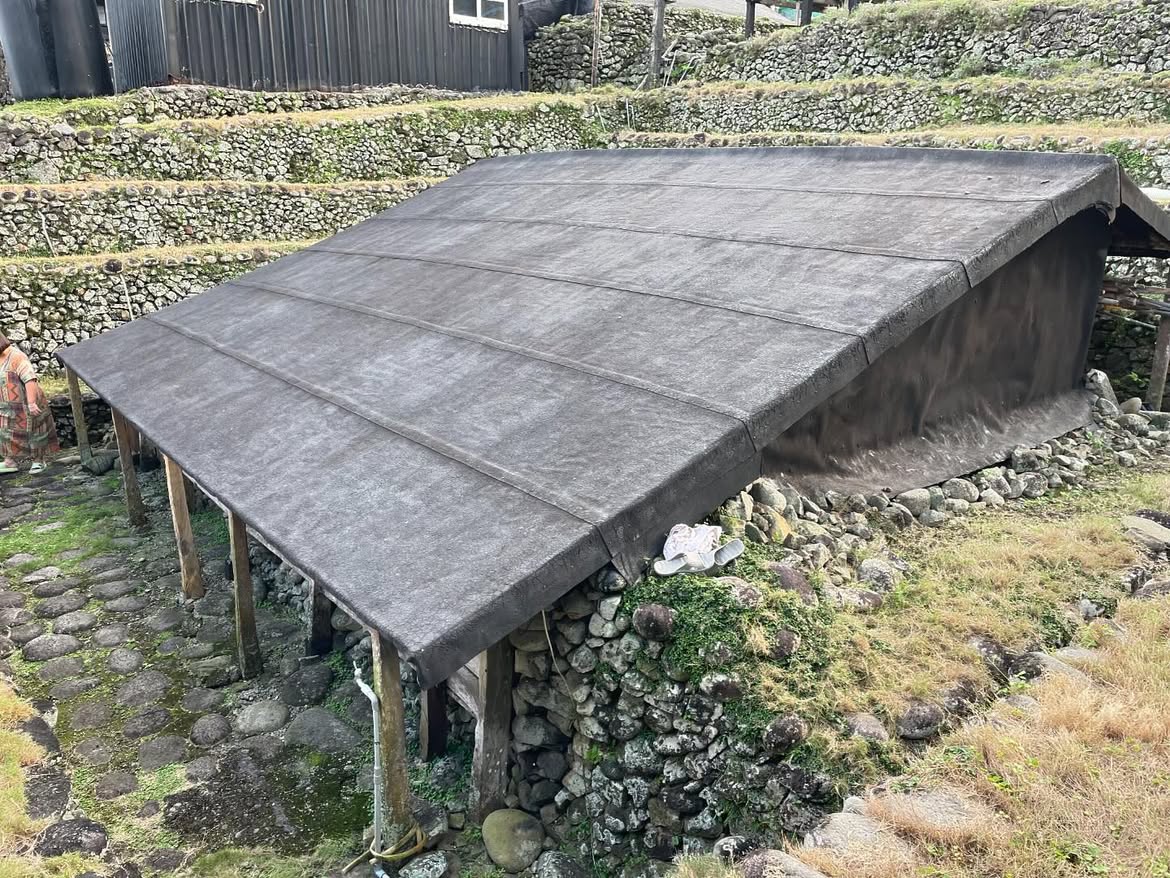
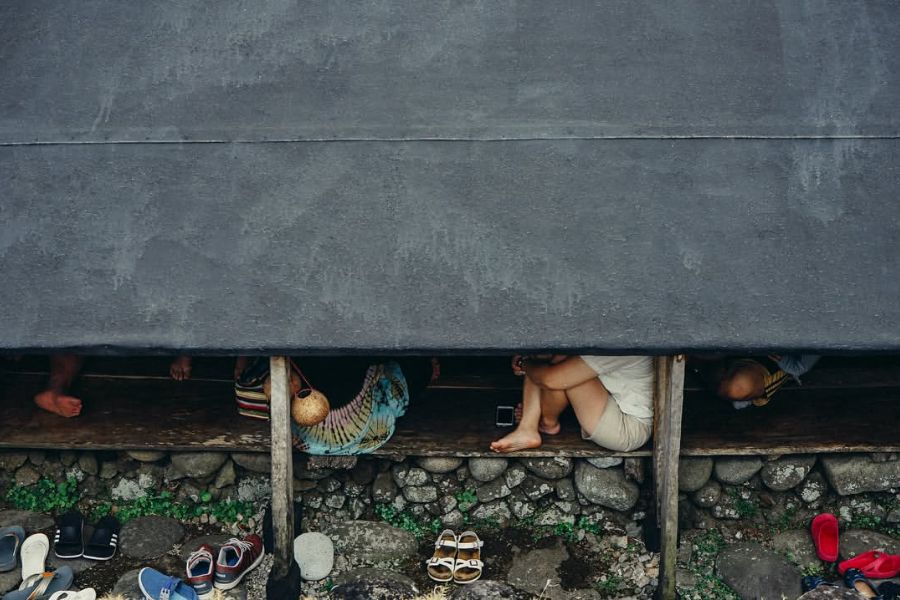
A complete household consists of a semi-subterranean main house, a work shed, and a raised platform. The main house, commonly known as an “underground house,” is built into an excavated site, with its foundation one to two meters below ground level. Stone walls are carefully assembled around the structure, while the house itself is built entirely of wood and stands about 1.5 meters high. In earlier years, the roof was covered with thatch, which was later replaced by sheet metal and tarpaulin. The work shed is where traditional plank boats are built and tools or household objects are woven. The raised platform stands above the ground, offering a place where family members can lean back, enjoy the sea breeze, and talk together in the evening. Beams and posts are made from local longan and camphor trees, while stones are gathered nearby. The entire house seems to have grown directly from the land.
(Photo credit: @bbo910037)
Wisdom Beneath a Simple Exterior
Despite its plain appearance, every part of the house reflects knowledge shaped by the climate. The paths surrounding the main house serve as walkways in dry weather and become drainage channels when it rains. Gaps between the cobblestones allow rainwater to flow toward the sea, so even though the house is built below ground level, it does not flood. Thick stone walls and layers of earth keep out both summer heat and winter winds. They also help the house withstand typhoons and earthquakes. When Typhoon Koinu struck, nearby raised platforms were overturned and houses were left leaning, yet the semi-subterranean houses remained firmly in place with almost no damage. Centuries of accumulated wisdom were clearly visible in the walls.
(Photo credit: @waranihon)
(Photo credit: @bbo910037)
(Photo credit: @waranihon)
Yeyin Village, a Living Settlement
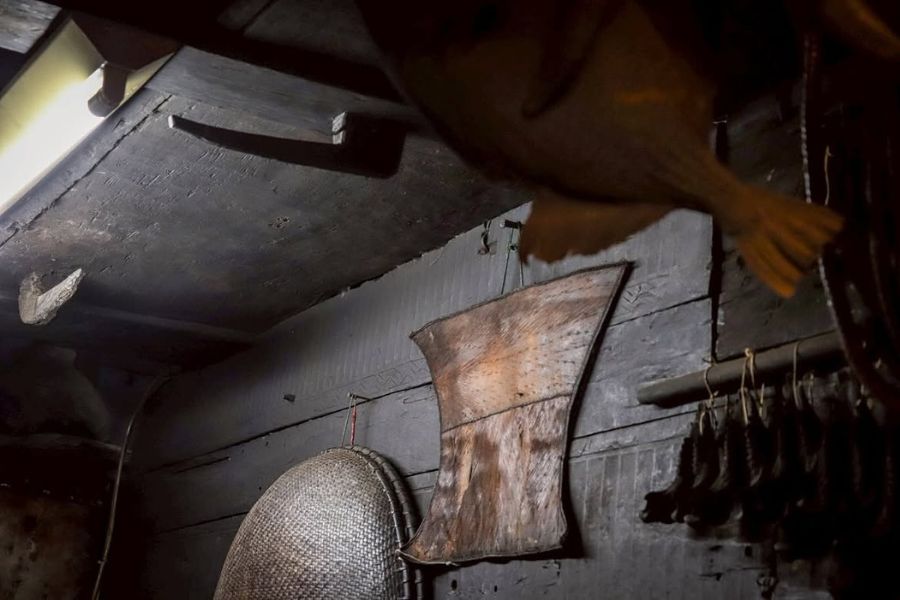
This knowledge is best preserved today in Yeyin Village. Its Tao name is Ivalino, meaning “beach morning glory.” Rows of semi-subterranean houses are arranged along the mountain slopes facing the sea. In 2002, the settlement was registered as a historic building by Taitung County and was later proposed as a potential World Heritage site. Public housing was introduced in 1966, but the concrete buildings were constructed with sea sand and were not suited to local living conditions. Many elderly residents eventually moved back into the semi-subterranean houses, which unintentionally helped preserve the traditional settlement. These are not monuments placed on display. People in their eighties and nineties still live in them today. Morning cooking smoke and the scent of flying fish being smoked at night continue to drift through the homes below ground.
(Photo credit: @bbo910037)
Step Inside with Care
The semi-subterranean houses carry generations of relationships, customs, and shared rules. Building a house has never been the work of one person alone. It depends on relatives and friends helping one another through labor exchange. The community draws clear boundaries. The lanes are shared spaces, but the main houses are private homes. Anyone who enters without permission, including members of the community, may be asked to leave. When visiting the old settlement, travelers should always be accompanied by a local guide. Do not enter without permission or take photographs casually. Do not climb onto the raised platforms without consent, and do not refer to them by the dismissive term “daydreaming pavilion.” Walk softly and carry respect. Only then can visitors honor the people who still live in these homes today.
(Photo credit: 莊志維 @chuang_chihwei)