


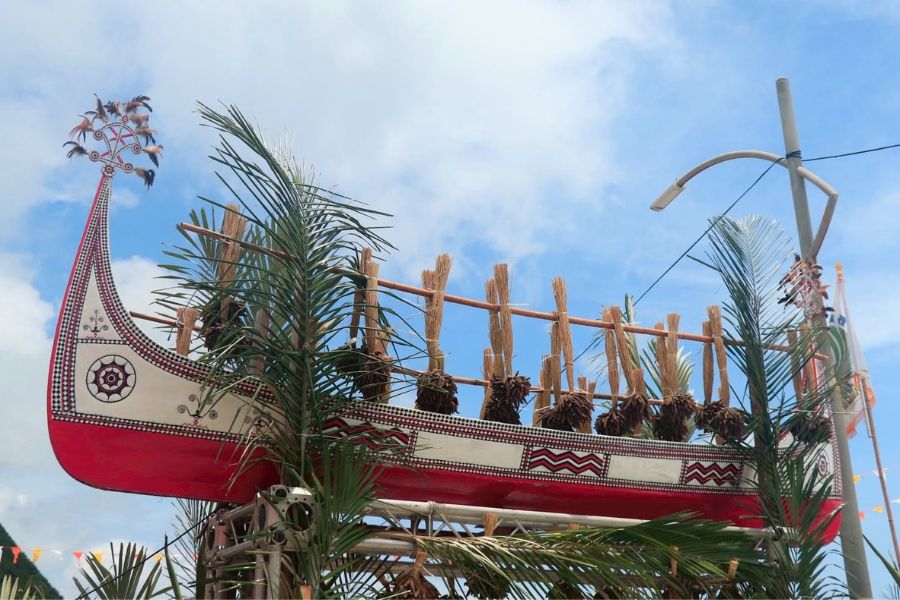
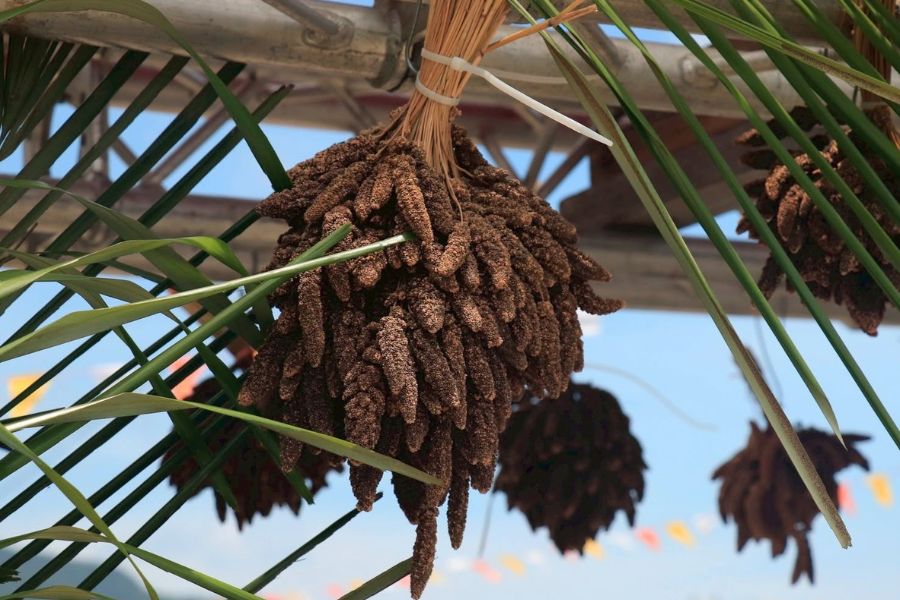
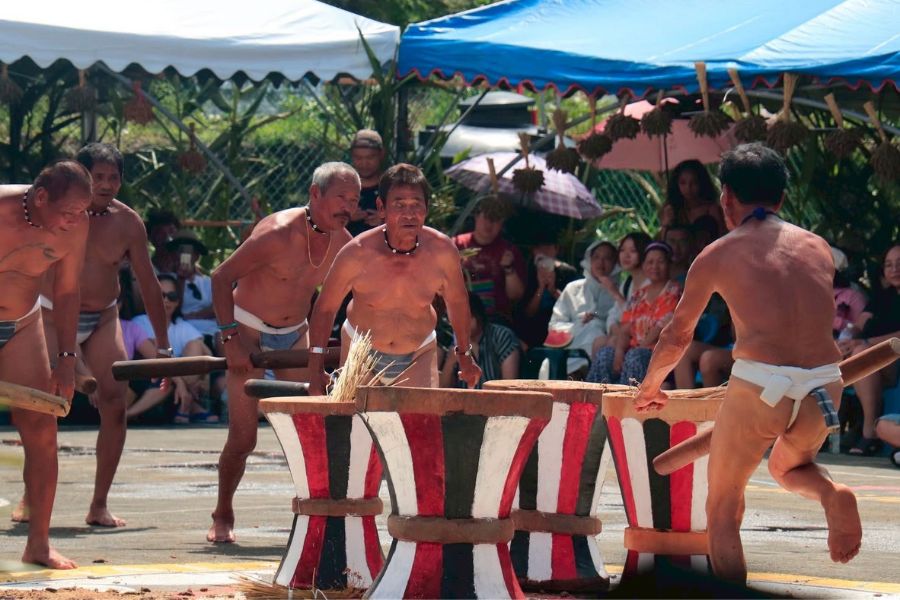
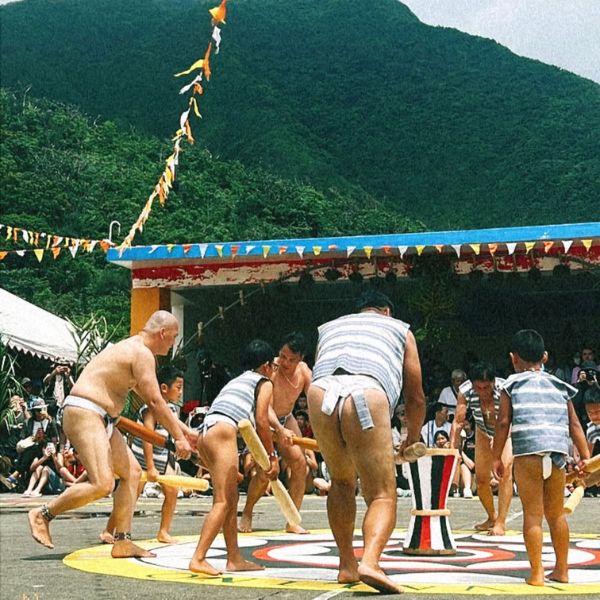
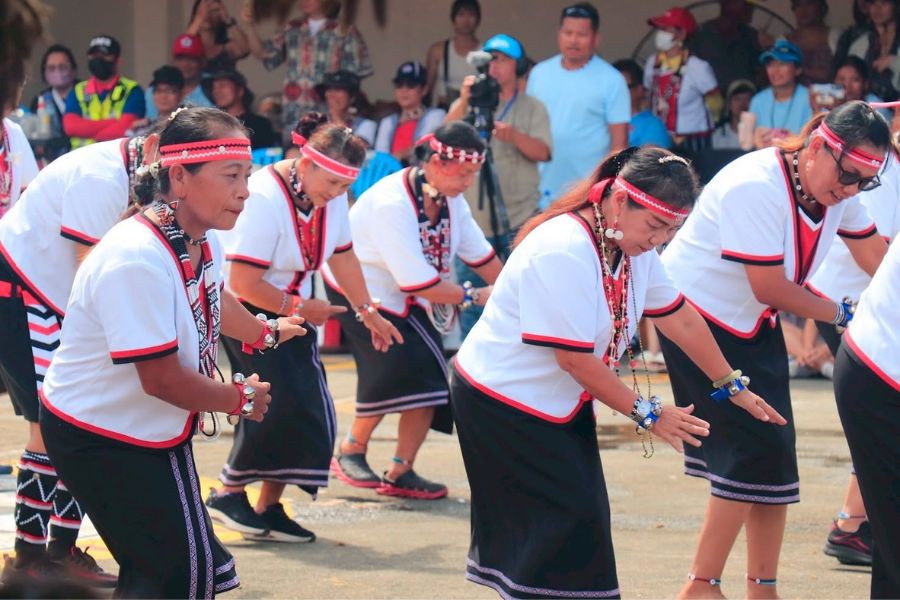
In the traditions of the Tao people, black millet is regarded as a grain of blessing and holds a noble place in local culture. People wrap millet in Indian almond leaves to pray for abundance in the fields and prosperity for the family. When visiting a friend, receiving a bundle of black millet means receiving thousands of grains filled with blessings. It also means that you are someone deeply cherished by the giver. Whenever the black millet harvest arrives, the Yeyin Tribe holds a harvest festival at its activity square, bringing the whole community together. The event also features Austronesian lifestyle experience workshops, walks through black millet fields, millet-pounding songs, and other cultural activities, offering a closer look at the living aesthetics passed down on this island for generations.
(Photo credit: Lanan Media)
(Photo credit: Lanan Media)
Food for Winter, Rice for Nourishment
In the past, the staple foods of Lanyu were taro and sweet potatoes. Black millet was not something eaten every day, but was treated more like a nourishing food. After women gave birth, elders would say that eating black millet could help with lactation. Those recovering from serious illness might also find it in their bowls as a way to replenish energy. In winter, Lanyu is hit by strong and cold northeast monsoon winds, making farming almost impossible. Black millet, which stores well, would then be brought out from storage and become an important source of food through the season.
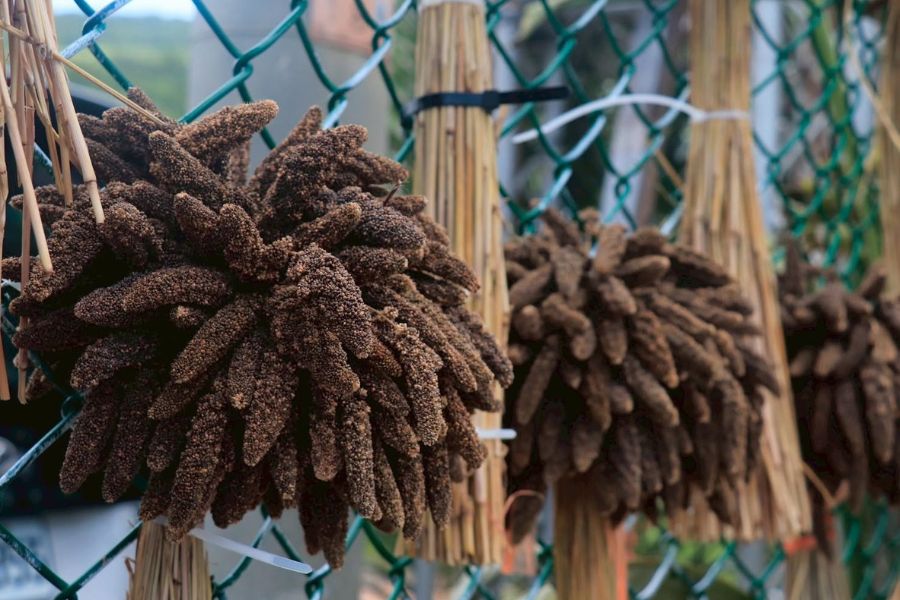
Unlike the large-eared millet commonly seen in Indigenous communities in Taiwan, this endemic short-eared variety has a dark outer husk, gray grains after hulling, and a plant height of about 90 centimeters. Its grains are especially tiny. Yet as eating habits changed and cultivation became too time-consuming, black millet was left unplanted for nearly 20 years, almost disappearing quietly from the island.
(Photo credit: Lanan Media)
Purification That Began with an Old Decoration
To bring black millet back, the first step was to find the seeds. Jiao Leike, a retired career soldier who had returned to his hometown more than a decade ago, once noticed several bundles of black millet hanging for over ten years as decoration on a relative’s TV wall. He tried planting them with the mindset of making one last attempt, and to his surprise, they actually sprouted.
However, years of mixed cultivation had made the genetic line less pure. The first priority in restoration was therefore to remove false and mixed varieties and strengthen the purification of the seed source, so that the true Lanyu black millet of the past could return to the fields. This seed conservation initiative was bolstered by technical support from the Taitung District Agricultural Research and Extension Station (TTDARES), stabilizing and preserving a variety that had teetered on the brink of extinction.

(Photo credit: pongso no tao)
(Photo credit: Lanan Media)
From Broadcasting to Row Planting, Yields Rose by 30 to 50 Percent
Once the seeds were recovered, the next challenge was encouraging more people to grow them. With recommendations from agricultural experts and support from the Taitung County Government, the community shifted from the traditional extensive method of broadcasting seeds to row planting, which is easier to manage. As a result, the yield per plant increased by 30 to 50 percent. Modern agricultural machinery was also introduced, saving considerable labor.
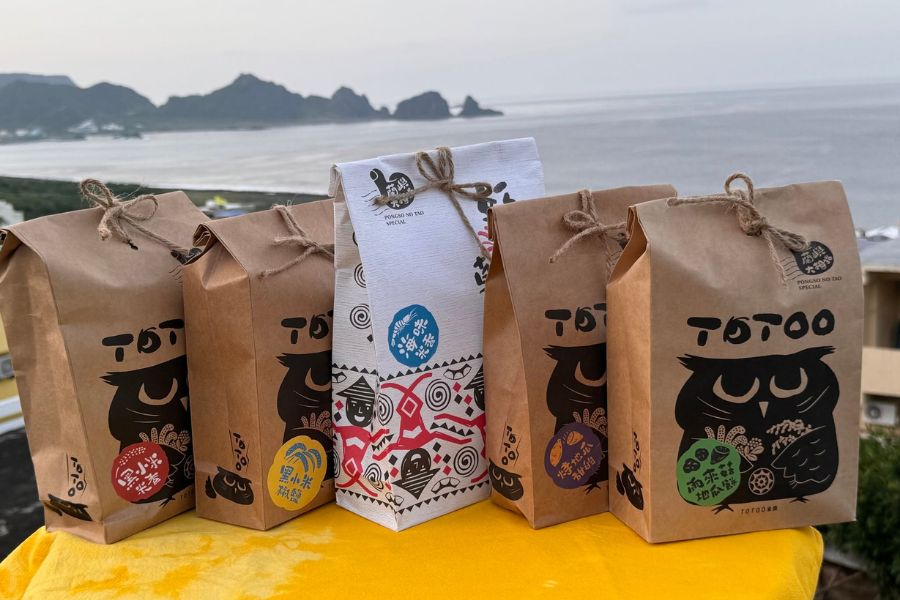
Today, three to four farmers on the island grow black millet through contract farming. The cultivated area is about 0.5 hectares, with an annual output of around 300 kilograms. The harvest has also been turned into local specialty products, including vacuum-packed Black Diamond Rice, black millet puffed rice snacks, and “native tree-berry puffed rice (Shu-qi)” inspired by childhood flavors. What grows in the fields is now becoming a local brand that can travel beyond the island, while also bringing tangible income to farmers in the community.
(Photo credit: pongso no tao)
(Photo credit: @hatchingdays__)
What Was Sown Back Was More Than a Crop
For the community, black millet has never been just food. It is like the traditional tatala plank boat. From selecting wood to assembling each plank, every step carries wisdom accumulated across generations. It must be passed down through oral tradition and hands-on teaching by the elders, then continued through methods suited to the present day.
Restoration is not simply about making money. It is about using local flavors to help people rediscover the land, food, and culture of Lanyu. Black millet, white sweet potatoes, and wetland taro are flavors shaped by the island’s climate and soil. Together, they form the most genuine face of Lanyu. When a full bundle of black millet bends once again in the field, those forgotten island memories are slowly being planted back into the land, little by little.
(Photo credit: Lanan Media)