


Taitung’s Indigenous communities have preserved many forms of bamboo craft, from fish traps and bamboo fishing tools to pavilions. Their beauty is easy to see, but the intricate techniques behind them also reflect generations of practical knowledge.
The six steps—selecting bamboo, splitting bamboo, shaving strips, bending, binding, and finishing—each determine the strength, flexibility, and shape of a bamboo artifact.
Bamboo craftsmanship in Taitung continues today, expanding from everyday tools to bamboo architecture. Many of these works are completed through the combined knowledge of community elders and skilled craftspeople. A visit to Taitung offers the chance to see how this tradition continues to evolve.
(Photo credit: Green Media)
(Photo credit: Green Media)
Are Taitung’s bamboo crafts decorative or practical?
First and foremost, they are tools. Bamboo objects in Taitung’s Indigenous communities were each created for a specific purpose.
- Bamboo fish trap: An Amis fishing tool placed in streams with its opening facing upstream to catch fish and shrimp.
- Bamboo fish trap: A bamboo fishing tool used in Zhongyong Village, Changbin Township. It has entrances at both ends, with inward-facing barbs that prevent mitten crabs and freshwater shrimp from escaping.
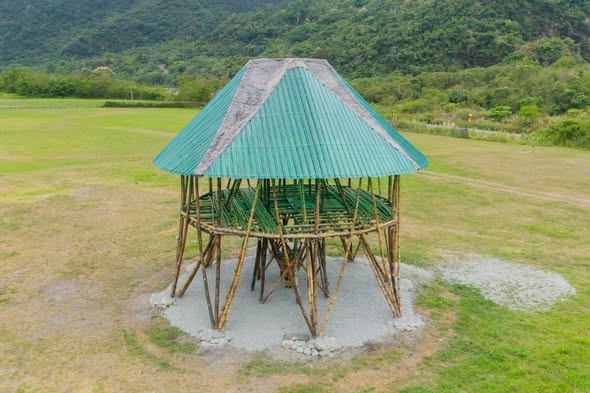
- Bamboo pavilion: In the Taromak Community, pavilions are built using the locally favored Basikaw bamboo, the same type of bamboo traditionally used for both everyday objects and construction.
Even in today’s industrialized world of fast production, these bamboo objects remain visually striking. Much of their beauty lies in the details and in the careful handwork that machines cannot easily reproduce.
Six Steps Behind Every Piece of Bamboo Craft
These details begin with a process that starts in the bamboo grove. Although finished objects may look very different, the basic preparation is much the same.
- Selecting bamboo: Identifying the base, middle, and tip of the bamboo, as well as its age. Clumping bamboo and running bamboo are suited to different purposes.
- Splitting bamboo: A bamboo splitter or knife is used to divide the bamboo into strips of similar width.
- Shaving the strips: Edges and nodes are trimmed away, and the bamboo strips are shaved thin and smooth enough to become flexible.
- Bending: Heat is applied to soften the fibers, allowing the bamboo to be bent into curves and fixed in shape.
- Binding: Pieces may be joined horizontally, crosswise, in T-shaped joints, or end to end. Bamboo pegs, cloth cord, or wire are used to secure the connections.
- Finishing the edges: Once the bamboo has been woven into a surface, rattan is used to finish the edges and keep the weave from coming apart.
(Photo credit: Green Media)
The fish traps and bamboo pavilions introduced above all rely on variations of these same techniques. Beyond their beautiful appearance, they also carry the knowledge accumulated by generations of community members.
How does an Amis bamboo fish trap keep fish from escaping?
The key lies in the meticulous weaving technique.
An Amis fish trap collected in Taiyuan, Donghe, was made by tying bamboo branches into a funnel shape. Four rattan strips were evenly spaced around the outside from top to bottom, while another strip was tied around the base. A woven lid was then added at the opening.
Fish and shrimp follow the current into the trap but cannot easily escape. The tension of the bindings determines whether the funnel keeps its shape, while the way the edges are finished helps prevent the catch from being injured. The six stages of bamboo work, along with generations of experience and judgment, are all contained within this small fishing tool.
(Photo credit: Green Media)
(Photo credit: Green Media)
How is traditional Indigenous bamboo weaving used in modern architecture?
When scaled up, the same set of techniques creates a space people can walk into.
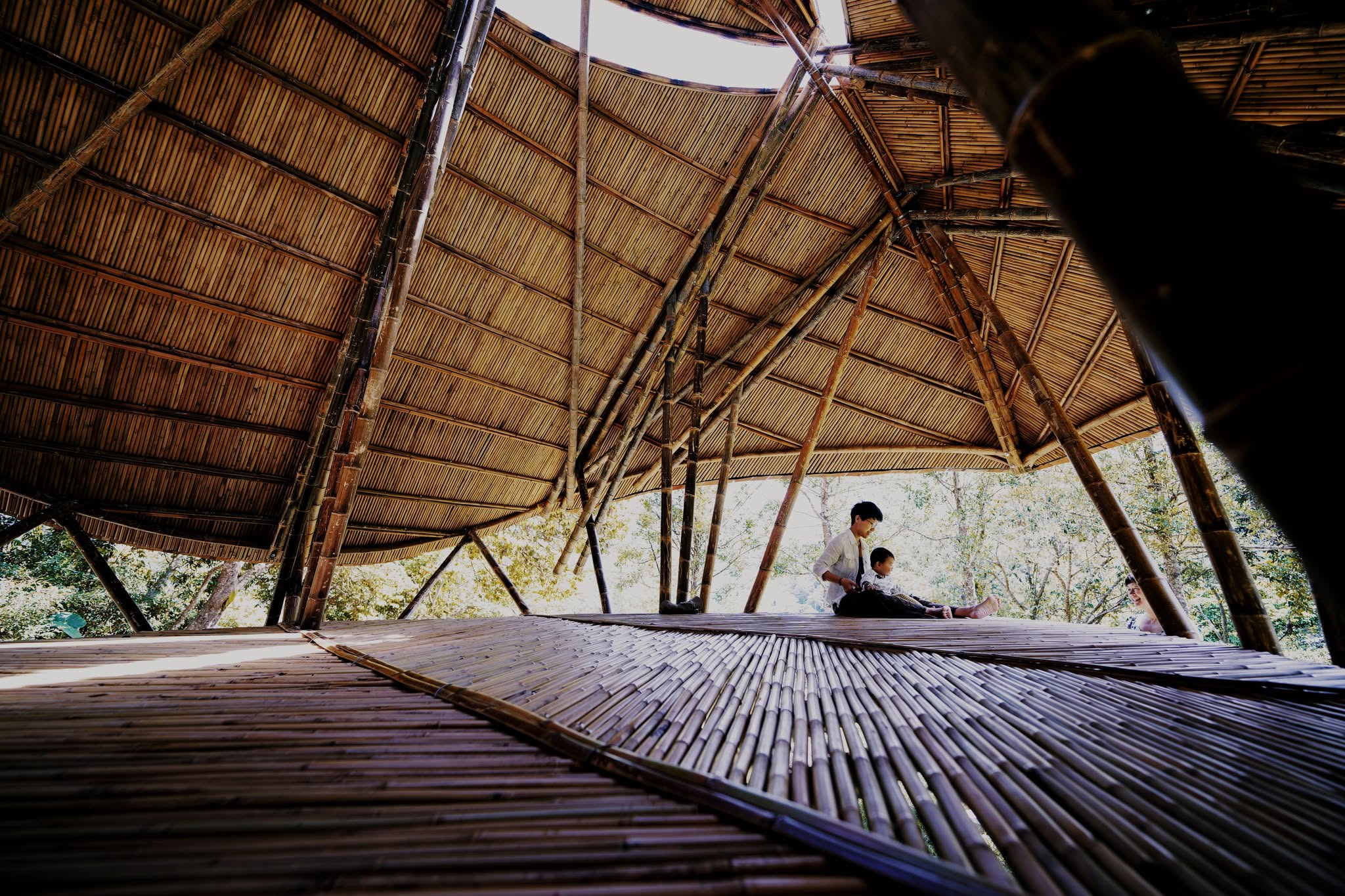
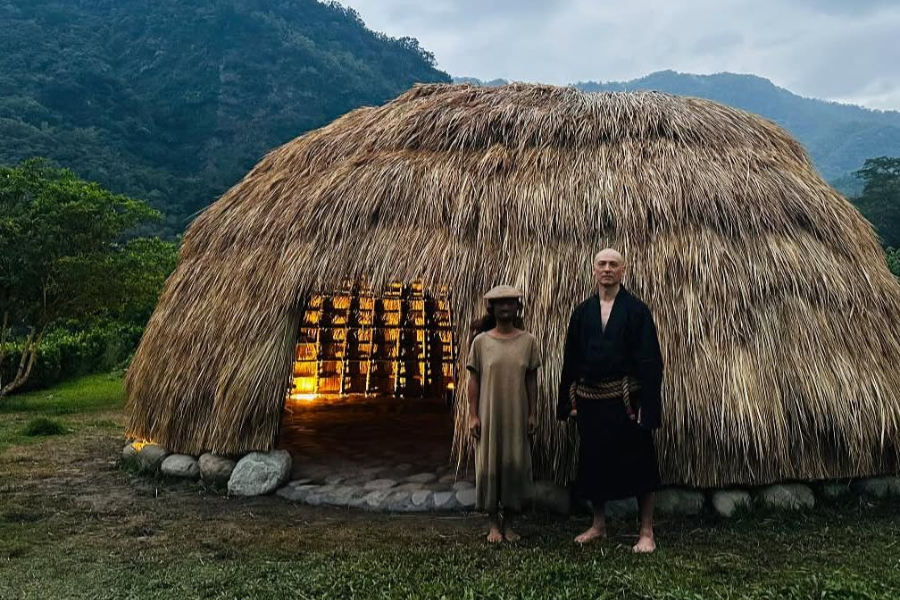
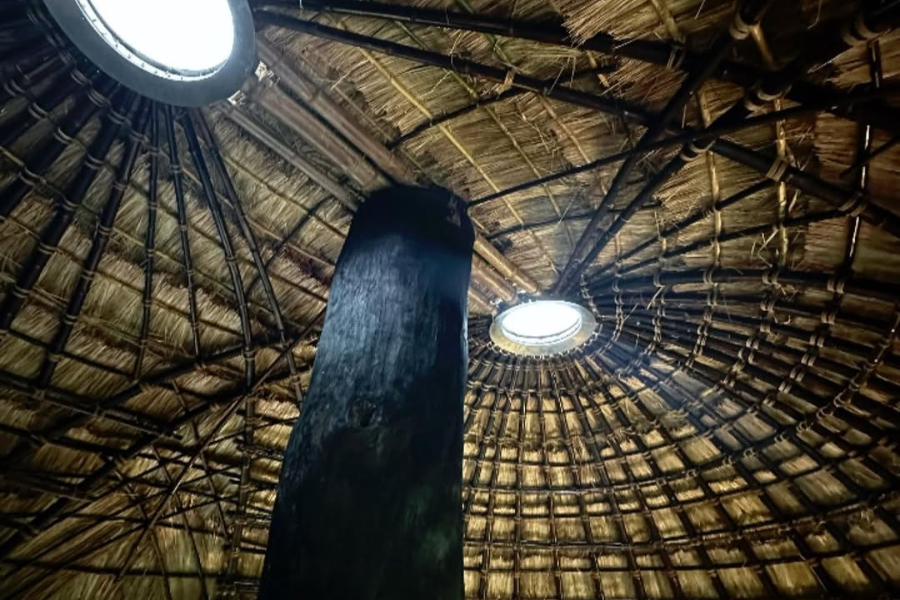
Third Place, a bamboo structure created by the Association of Humanitarian Architecture, takes its name from the idea of a place outside work and home. Its dome is made from more than a hundred bundled bamboo rings. The design of each unit was inspired by the edge-finishing techniques used in traditional bamboo baskets and fish traps.
The construction process also follows the same basic principles of bamboo craft. Moso bamboo was sourced from Hongshi Forest Road in Haiduan, soaked in Zhiben Hot Spring water for preservation, then heated and bent into curved bamboo beams. The joints were tied repeatedly with hemp rope before the structure was covered with translucent fabric. At night, the interior lighting reveals the pattern of the bamboo rings. From a distance, the structure resembles a giant glowing ladybug.
A Complex Bamboo Structure Built with Traditional Knowledge and Modern Craft
A structure like this cannot be completed by one pair of hands.
The bundled bamboo rings were first fabricated at Taipei Municipal Da-An Vocational High School. After being transported to Taitung, work continued at Catholic St. Joseph Technical High School, where alumni from woodworking, interior design, and architecture programs spanning nearly 50 years returned to help.
The bamboo motifs on the dome were woven section by section by students under the guidance of Elder Zheng Hao-Xiang from the Puyuma Community, using Puyuma motifs. Young people from Katatipul helped with the basic hemp-rope binding.
In this way, techniques once held in the hands of elders were passed directly into the hands of students.
(Photo credit: @huchia7)
Take a Trip to Taitung to Appreciate the Beauty of Bamboo Weaving
Beyond the dome, Taitung is home to many artworks that incorporate bamboo weaving techniques.
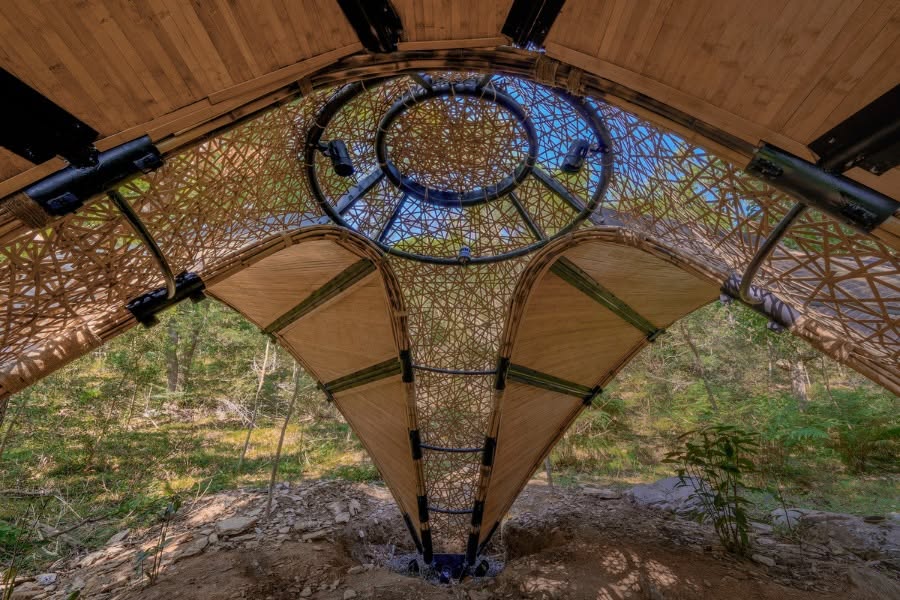
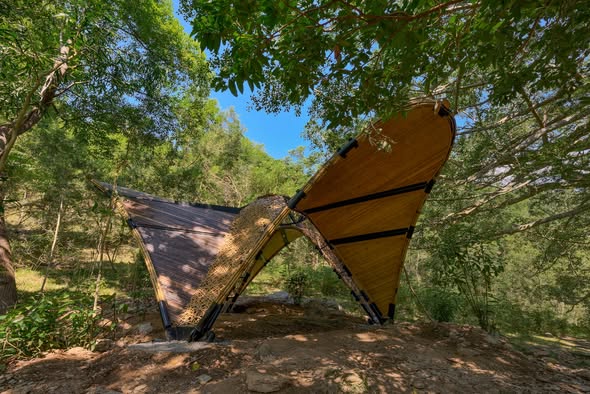
- Bamboo Butterfly at Zhiben National Forest Recreation Area: Located beside the Haohanpo Trail, this work uses laminated moso bamboo strips to form a thin-shell structure supported by only three points touching the ground.
- Stone’s Child, also located in the same recreation area: Inspired by the Puyuma stone-birth myth, its framework combines stone, rattan, and hemp rope.
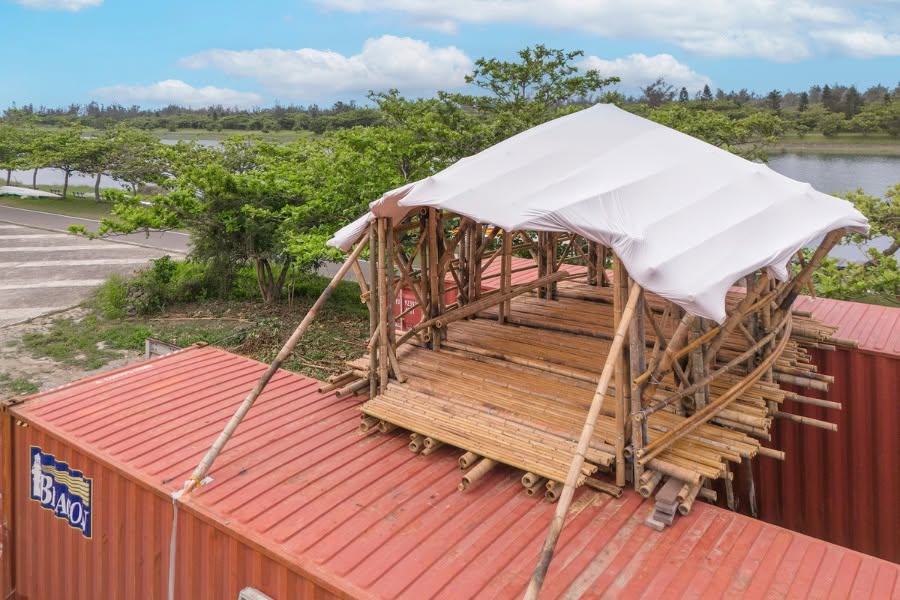
- Pataminaan at Flowing Lake in Taitung Forest Park: This bamboo structure is integrated with two 12-meter shipping containers. From the rooftop, visitors can look out toward Green Island.
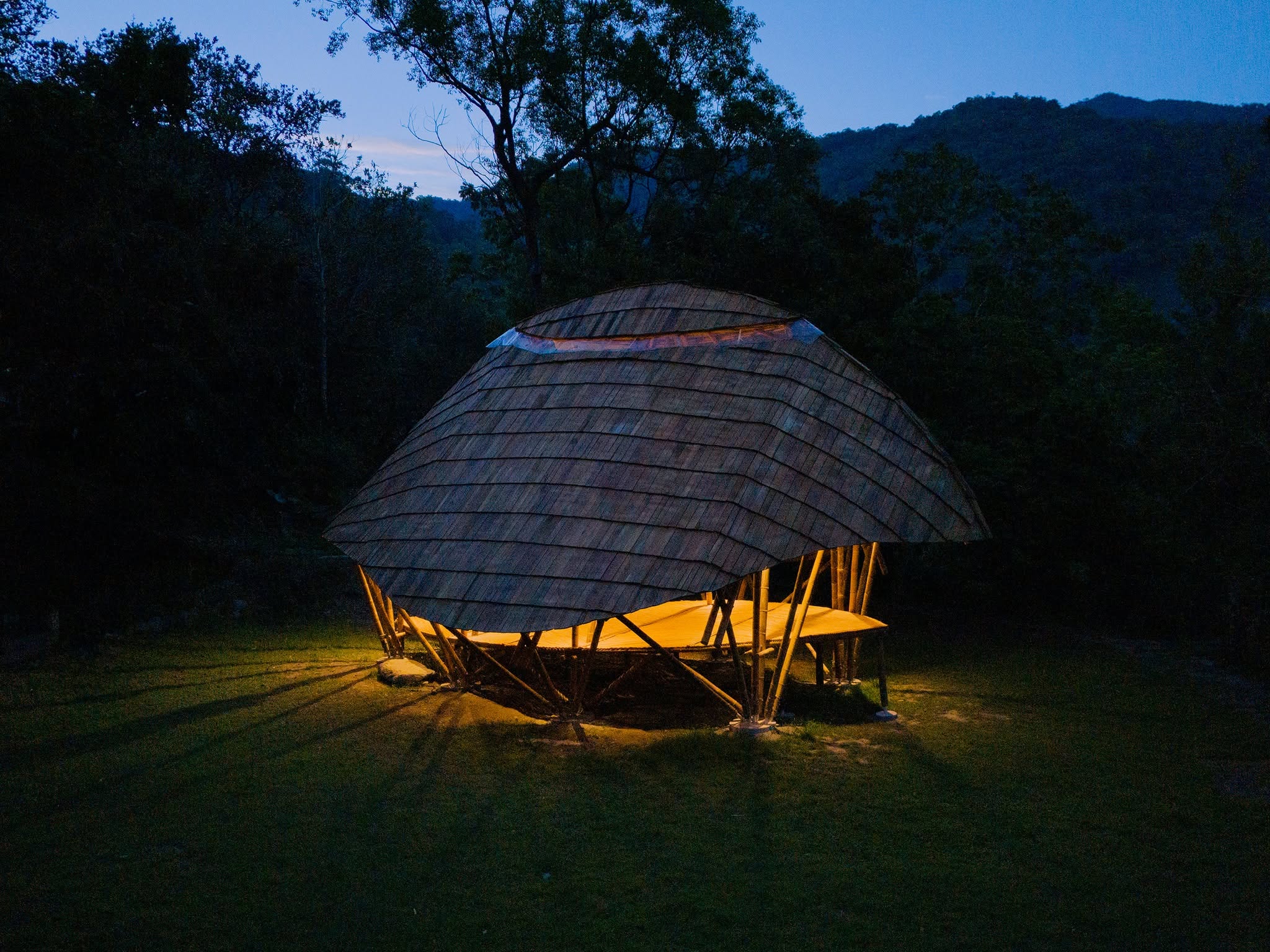
- Pavilion lrilriya in the Taromak Community: In the Rukai language, lrilriya means a place for temporary rest. The pavilion is built entirely with a locally used bamboo species.
(Photo credit: Green Media)
If you want to see how bamboo craftsmanship can grow from a small fish trap beside a stream into a dome in the forest, these places offer a good reason to explore Taitung.