


“Bàn” is the general term for rice-based foods in the Hakka language, equivalent to “guò” in Min Nan. In English, these can generally be understood as Hakka rice cakes. Water rice cakes, sweet rice cakes, fermented rice cakes, mugwort rice cakes, and red turtle rice cakes all fall into this category.
Steaming sweet rice cakes for the Lunar New Year, making “Xinding Ban” for the Lantern Festival, and wrapping vegetable-stuffed rice cakes for Qingming—in Hakka villages, each type of “ban” corresponds to specific seasonal festivals and ceremonial occasions.
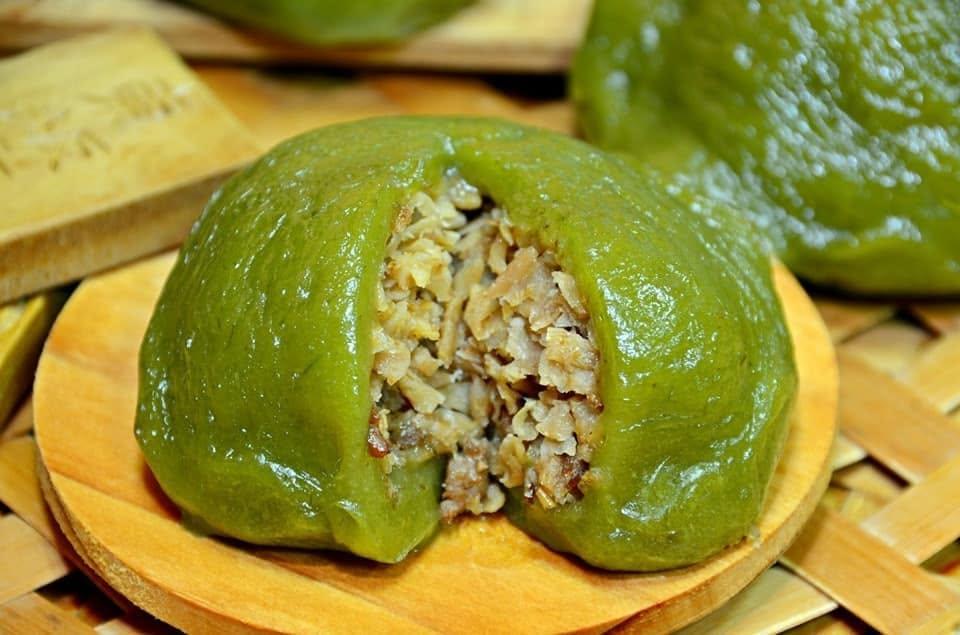
“Dong Ban Xiang” in Chenggong Township, Taitung County, has been passed down through three generations. Its morning market stall opens at 7:30 a.m., and their freshly made water rice cakes, mugwort rice cakes, and sweet rice cakes often sell out in an instant.
(Photo credit: Dong Ban Xiang)
What exactly do the Hakka mean by “ban”?
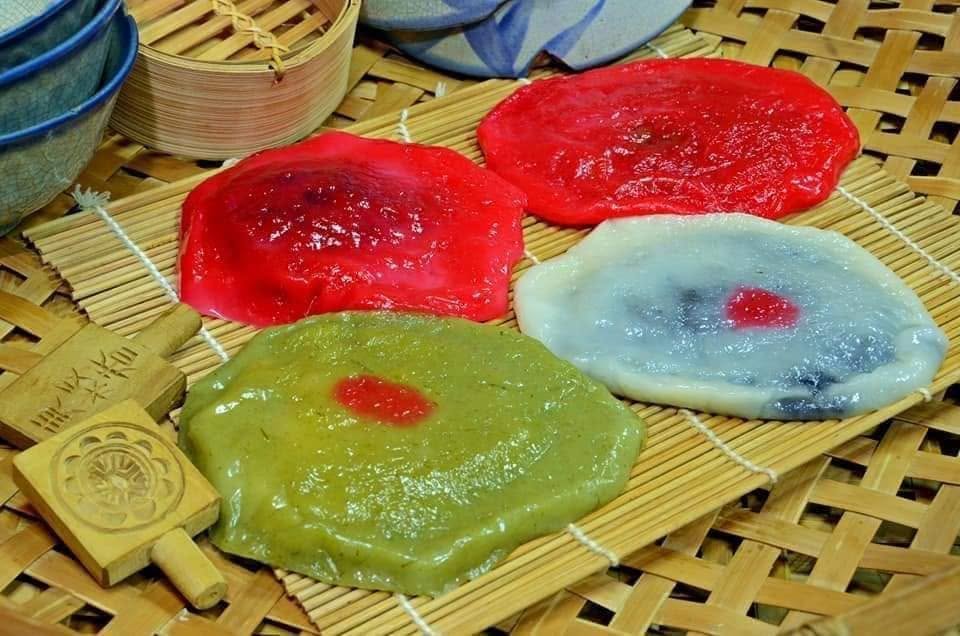
“Ban” is the Hakka word for “guo,” a general term for foods made from rice. In Hakka communities, this term encompasses an entire classification system, with several common varieties:
(Photo credit: Dong Ban Xiang)
- Shui ban: A steamed rice bowl cake made from non-glutinous rice batter, available in both savory and sweet versions.
- Sweet rice cake: Made with glutinous rice and traditionally eaten during Lunar New Year as a symbol of family reunion.
- Fa ban (Cracked Rice Cake): A steamed rice cake that splits open on top as it cooks. Hakka people describe the opening as a “smile,” and the more it cracks, the more auspicious it is.
- Ai Ban (Mugwort rice cake): A rice cake mixed with mugwort, giving it a distinct fresh, herbal aroma.
- Honggui Ban (Red tortoise rice cake): A red rice cake stamped with a tortoise-shell pattern, also known as “Honggui Guo.”
Some older Hakka people say that not everyone in a Hakka community was necessarily good at everyday cooking, but almost every Hakka woman knew how to make rice cakes—they simply learned by watching their mothers.
Soaking the Rice for Three Hours Is Just the Beginning
Traditional Hakka rice cakes take time to make, and few shops today still follow the full traditional process. Dong Ban Xiang in Chenggong Township is one of the places that continues to do so.
- Soaking the rice: The rice is soaked for a full three hours every day so the grains can absorb enough water.
- Grinding: In the past, rice was ground using a stone mill, which required two or three people to operate together.
- Removing excess water: Extra moisture is pressed out of the rice batter. This step determines how soft or firm the finished rice cake will be.
- Mixing and shaping: The ingredients are mixed in the right proportions, shaped by hand, and filled when needed.
- Steaming: The rice dough and filling are steamed thoroughly. This also helps sterilize the food and extends its shelf life.
(Photo credit: Dong Ban Xiang)
After finishing one round, they have to get up at 4 a.m. to prepare the ingredients, and by 7:30 a.m., the stall is set up—only to sell out in no time.
(Photo credit: Dong Ban Xiang)
Why are traditional Hakka rice cakes so chewy?
The key is using less water. Once the water ratio changes, both the chewy texture and the aroma of the rice change with it. Dong Ban Xiang uses higher-cost glutinous rice grown in the East Longitudinal Valley, known for its strong rice aroma. Shui ban, on the other hand, requires less sticky non-glutinous rice so that it does not turn into one dense mass after steaming. Heat control and hand strength matter just as much. The mugwort used in the shop’s mugwort rice cakes is grown in-house, and a special preparation method helps preserve its bright green color and aroma.
The preserved radish filling used in the herbal rice cakes takes even more work. It is stir-fried over medium heat for four hours, then cooled and stirred for another four hours over ice. One pot stays hot while the other stays cold, and the hands cannot stop moving. Only after eight hours is the filling ready to be refrigerated.
Every Season Has Its Own Rice Cake
Rice cakes have a fixed place in Hakka life. Which kind is made at which time of year is almost understood without needing to be discussed.
- During the Lunar New Year, people steam sweet rice cakes, which are usually round in shape to symbolize good fortune.
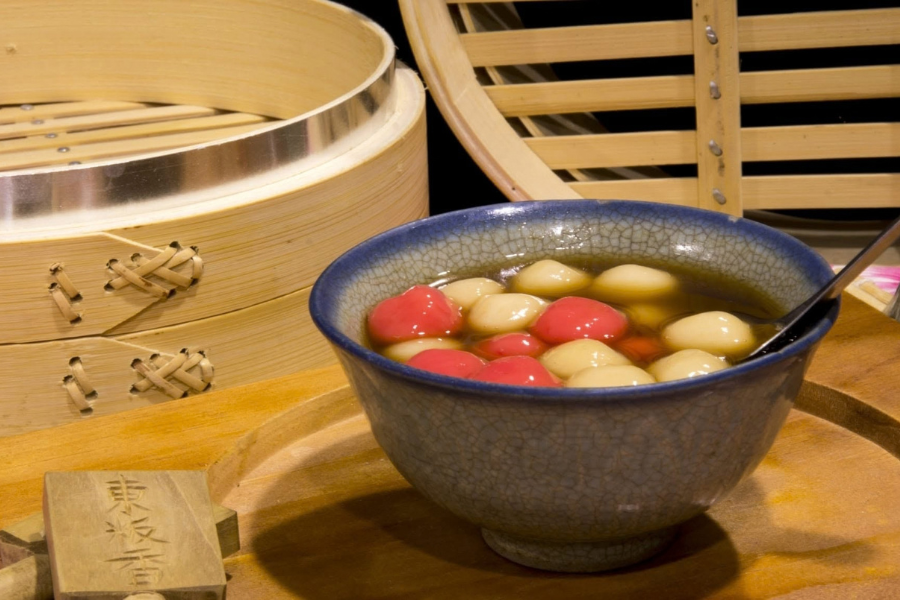
- On the Lantern Festival, families make “newborn rice cakes”; those who’ve welcomed a new child offer red rice cakes to the village guardian deity to express gratitude and pray for the child’s safety.
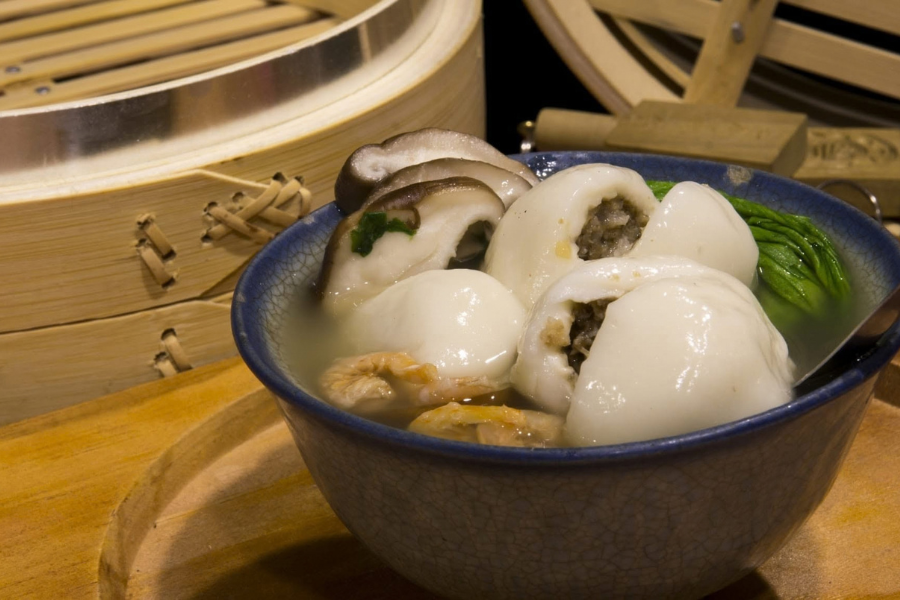
- During the Lunar New Year and Qingming Festival, people wrap “cai bao,” which resemble the bamboo baskets used in the past to carry piglets; they are also called “pig-cage rice cakes.”
- For ancestral rites, people steam “fa ban”; the larger the crack in the cake, the better the fortune for the coming year.
- When a married daughter returns to her family home for the first time, her mother prepares a sweet glutinous rice cake for her to carry back to her husband’s family in a bamboo basket.
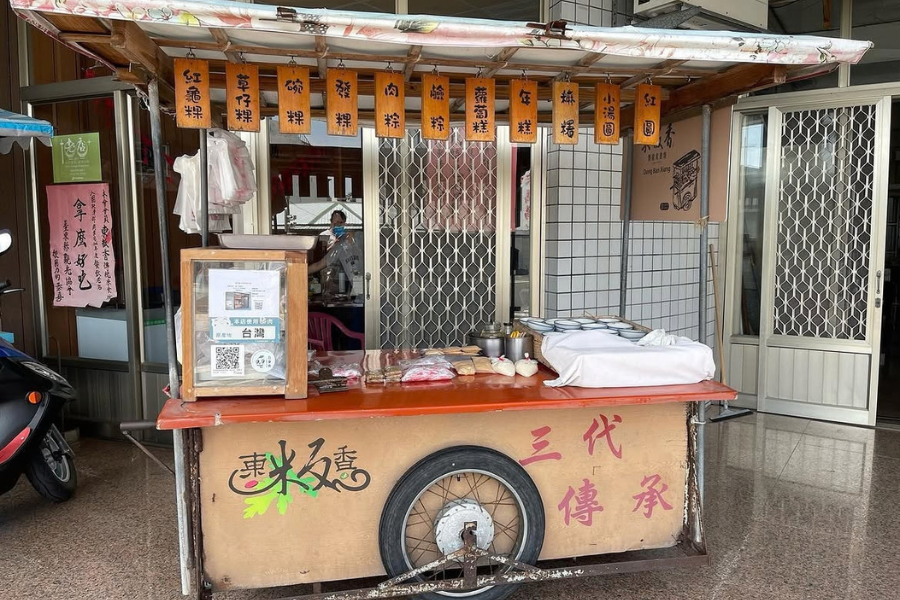
(Photo credit: @bobo76546969)
Dong Ban Xiang: 70 Years of Traditional Hakka Rice Cakes in Taitung
The story of Dong Ban Xiang began in 1949. Its founder, Luo Lin San-Mei, made rice-based foods and rice dumplings in Chishang during breaks from farm work and sold them aboard trains.
In 1969, as the local lemongrass industry declined, she and her son moved to Chenggong Township. The second generation, Liu Rong-Hua, noticed that there were few Hakka snacks in the area and began selling shui ban. He also referred to it as a bowl rice cake, using a more familiar term to connect with Han Chinese and Indigenous neighbors.
After the third generation, Liu Jun-Liang, returned home to take over the business, he formally established the shop name. He also created miniature versions of sweet glutinous rice cake and introduced savory rice dumplings and alkaline rice dumplings for the Dragon Boat Festival.
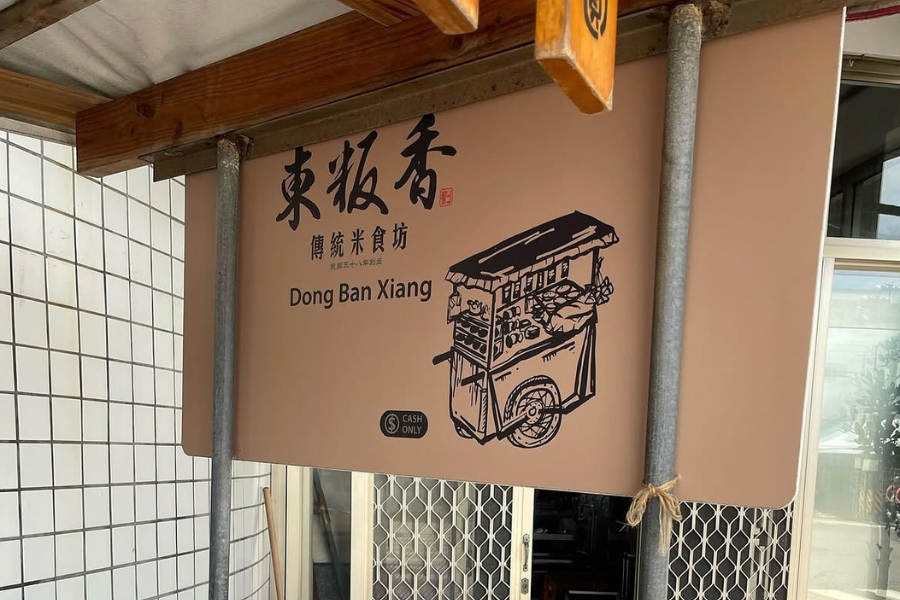
(Photo credit: @bobo76546969)
Before making a special trip here, here are a few things to know:
The morning market stall is located across from the Credit Department, Chenggong Township Farmers’ Association of Taitung County. It opens at 7:30 a.m. and closes when everything is sold out.
After 12 noon, the business moves back to its storefront at No. 187 Zhonghua Road.
Mochi costs NT$70 per pack, a large bowl of rice cake costs NT$100, and most other items are around NT$20 per serving.
If Chenggong Township does not fit into your itinerary, Jung Shu Hsia Short Rice Noodles and Lao Dong-Tai in Taitung City also serve thick rice noodles, another rice-based specialty. When you visit Taitung, remember to save a little room for Hakka rice noodle dishes.
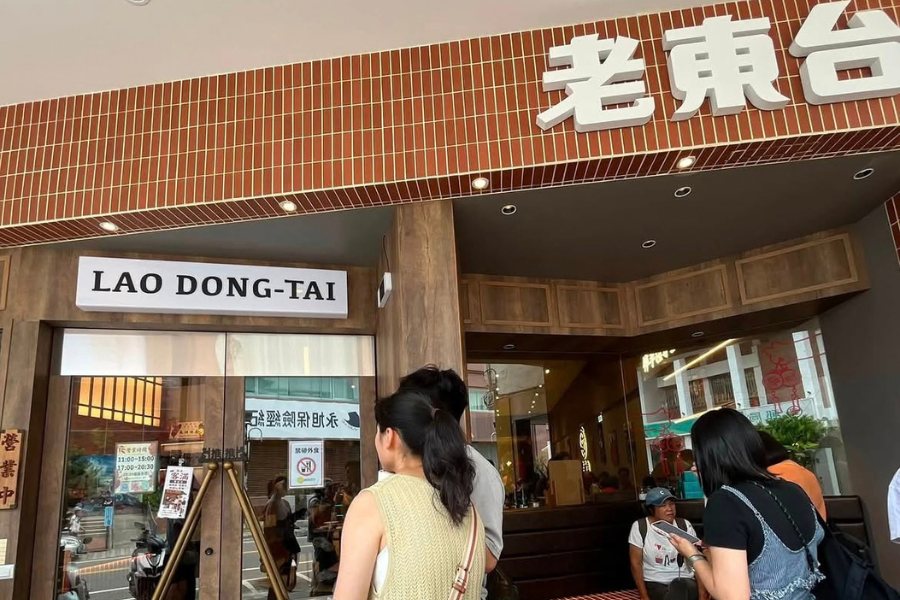
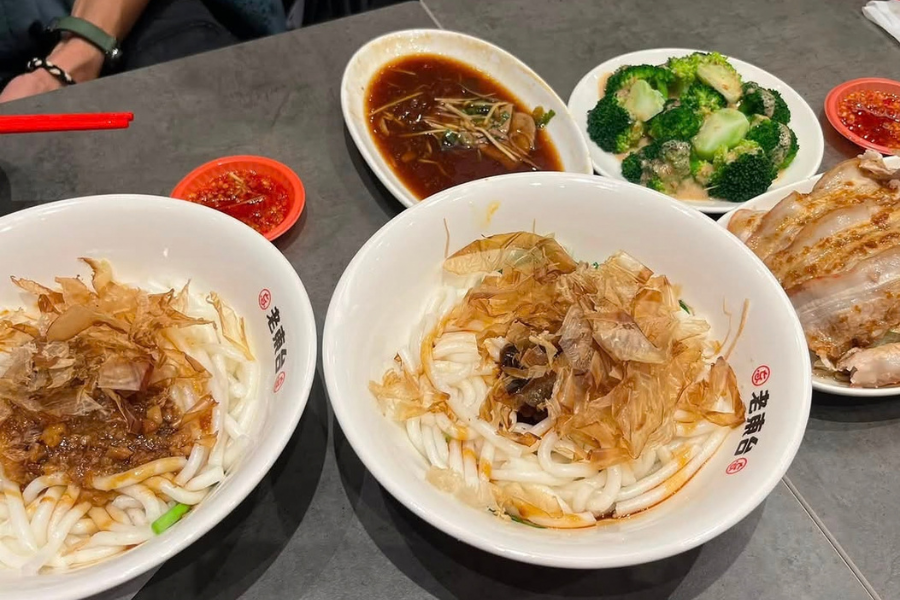
(Photo credit: @amy.chang.710)
