


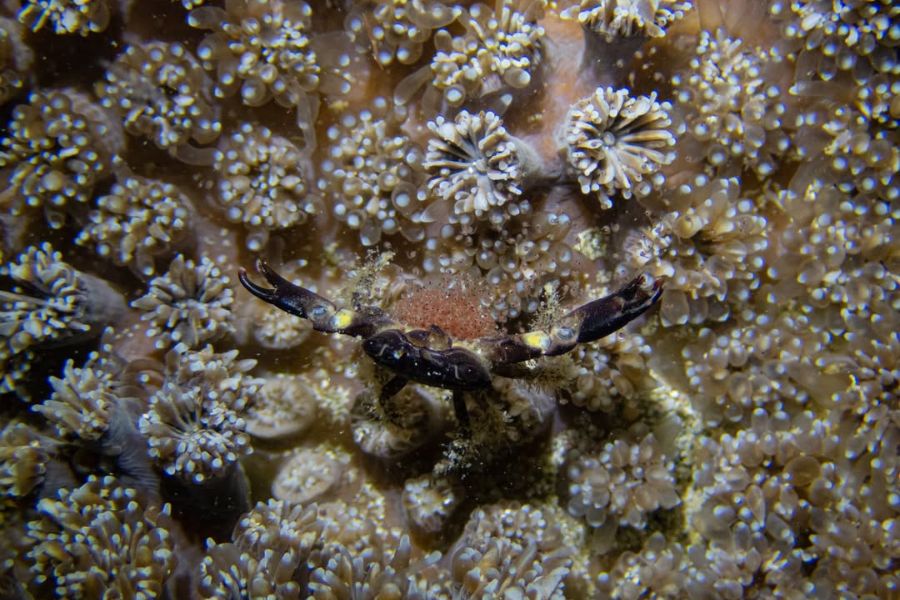
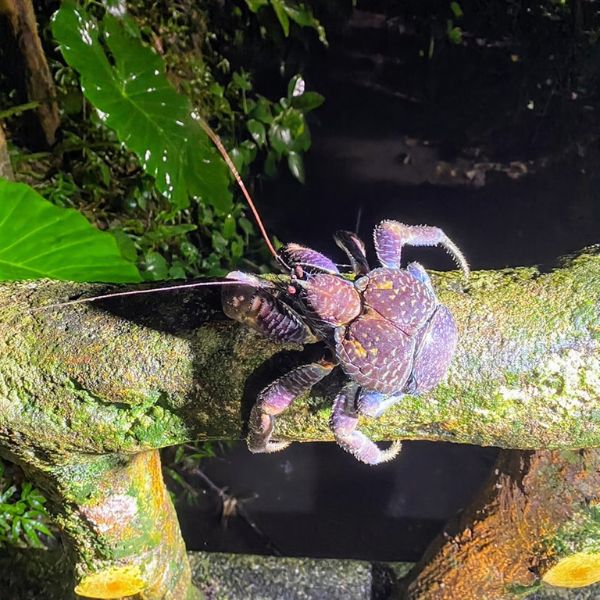
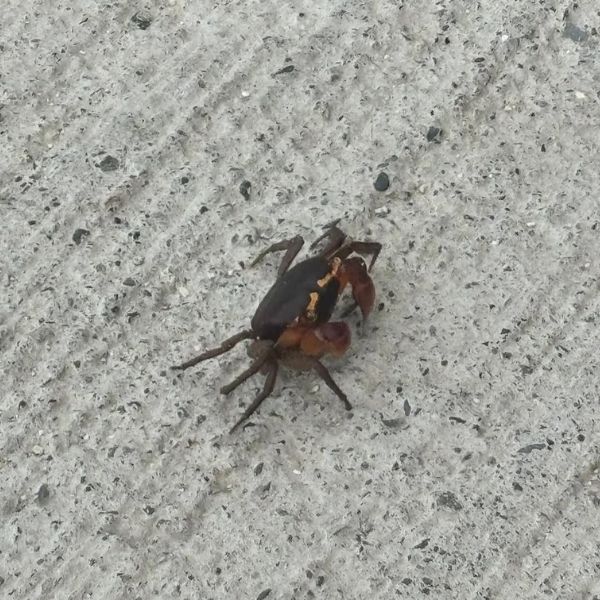
Located about 33 kilometers off the southeastern coast of Taitung, Green Island is famous for its peak diving season from June to October. This period, however, also marks the critical breeding season for the Swinhoe’s crab (Orisarma intermedium). This small creature, with a carapace only two centimeters wide and distinct yellow “eyebrows,” typically hides in coastal and inland secondary forests. During the waning moon phase of the lunar month, egg-bearing females follow the scent of the sea, emerging from rock crevices and grass to cross the island road to release their larvae in the surf. The stretch from Shilang to Guiwan is their most active corridor. Other species, including the purple land crab, the short-armed land hermit crab, and even the protected coconut crab, also inhabit this intersection of forest and sea, sustaining Green Island’s vital ecological cycle.
(Photo credit: @julianjuv)
(Photo credit: @lucanidaeviva)
A Summer of 70,000 Visitors and an Eight-Meter Danger Zone
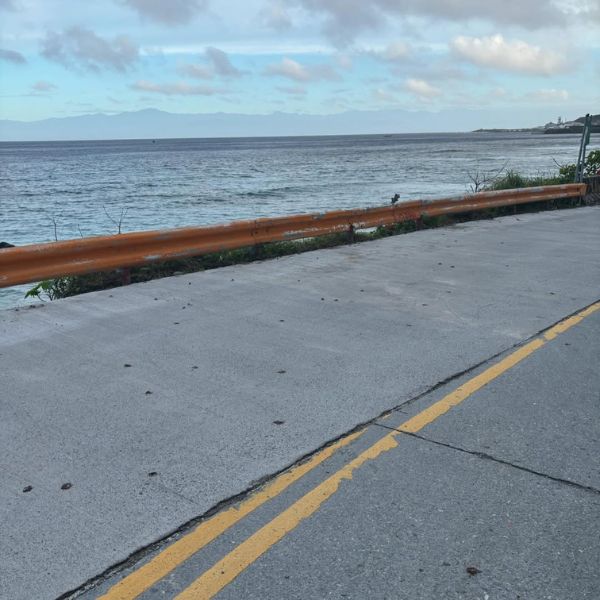
Over the past decade, Green Island has averaged over 300,000 visitors annually. Between May and October, monthly arrivals often exceed 30,000, peaking at over 70,000 during the summer holidays. When the constant flow of tourist scooters overlaps with the crabs’ migration paths, tragedy often strikes in the pre-dawn hours. On July 21, 2014, a local cultural worker recorded a staggering 2,247 female Swinhoe’s crabs crushed by vehicles in the Shilang section alone. Subsequent research revealed that long-term roadkill pressure has caused abnormal population shifts, such as smaller body sizes and earlier sexual maturity. In some hotspots, the population of tree-climbing lizards has plummeted to half its original size. This road is more than a hazard for crabs; it is a warning signal from the island’s entire ecosystem.
(Photo credit: @govh_taiwan)
From Surveys to “Crab Guardian” Heroes
To address this crisis, the Taiwan Endemic Species Research Institute has been conducting surveys commissioned by the East Coast National Scenic Area Administration (ECNSAA) since 2020. To date, 20 species from seven families of land crabs have been documented, including three newly recorded species on Green Island. During peak release periods, a single survey has recorded up to 112 roadkill casualties. In response, the ECNSAA continues to host the “Crab Guardian Heroes” campaign (Thank You for Your Love). When first piloted in 2014, just two sessions attracted 265 participants—including guesthouse owners, diving instructors, students, and tourists—all carrying buckets to manually transport mother crabs. Those initial sessions alone saved 4,669 mother crabs, turning a conservation slogan into tangible footsteps on the road.
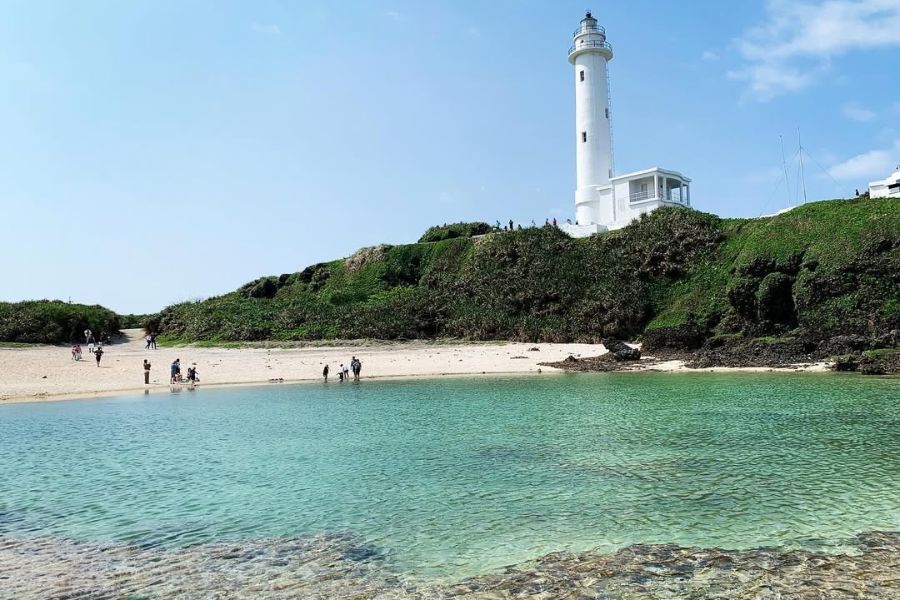
(Photo credit: @salt.wang)
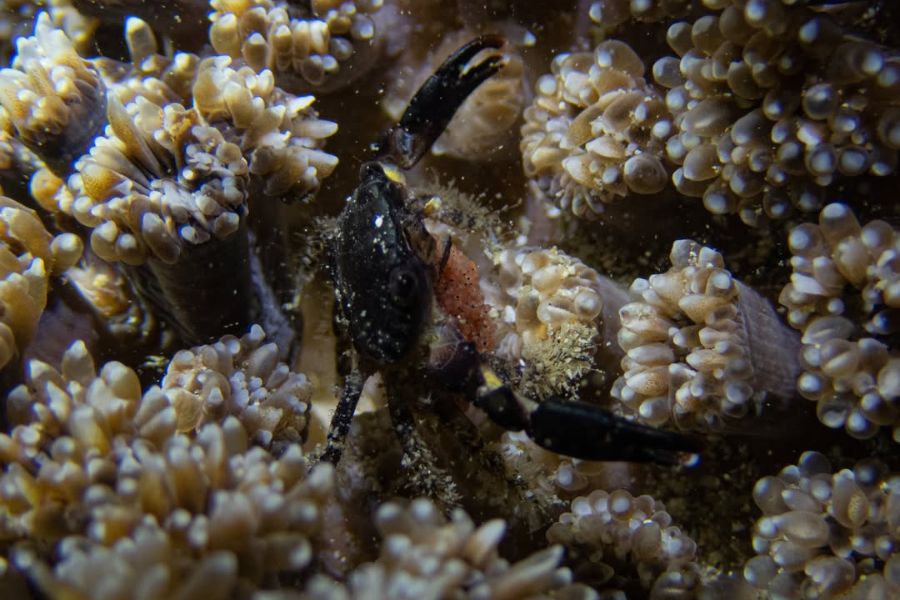
(Photo credit: @julianjuv)
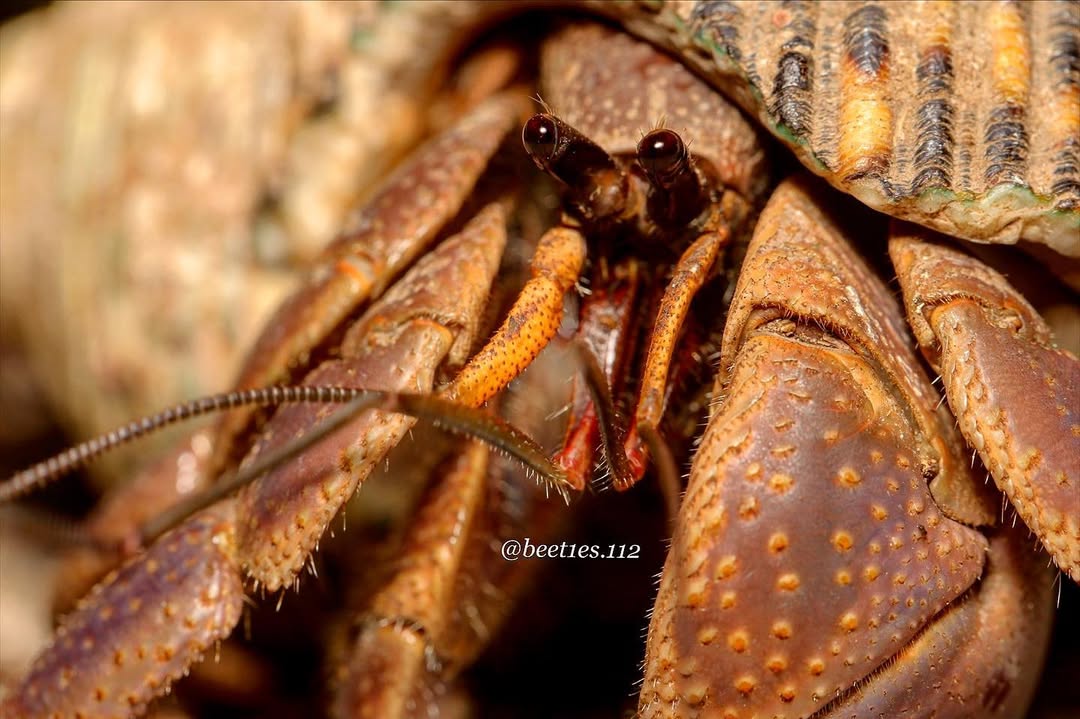
(Photo credit: @beet1es.112)
Homes for Hermit Crabs and Coastlines Restored in Bags
Beyond crab protection, coastal cleanliness is vital for the survival of these species. The Taitung Nature and Humanities Association established the “Hermit Crab Housing Agency” on the island to collect natural snail shells for hermit crabs that had been forced to use styrofoam or bottle caps as makeshift armor. The “Green Island Eco Slow Travel Series,” organized by the Taitung County Government and ECNSAA, will run from May 1 to October 31, 2026. The program integrates Guoshan Ancient Trail forest healing tours, the Crab Guardian Walk, and beach cleanups. Visitors can collect cleanup kits at the Visitor Center, picking up litter as they explore and restoring the beach to its pristine state. From slowing down your scooter to bending down to lend a hand or carrying away a bag of trash, Green Island’s sustainability is built on these small, deliberate actions.
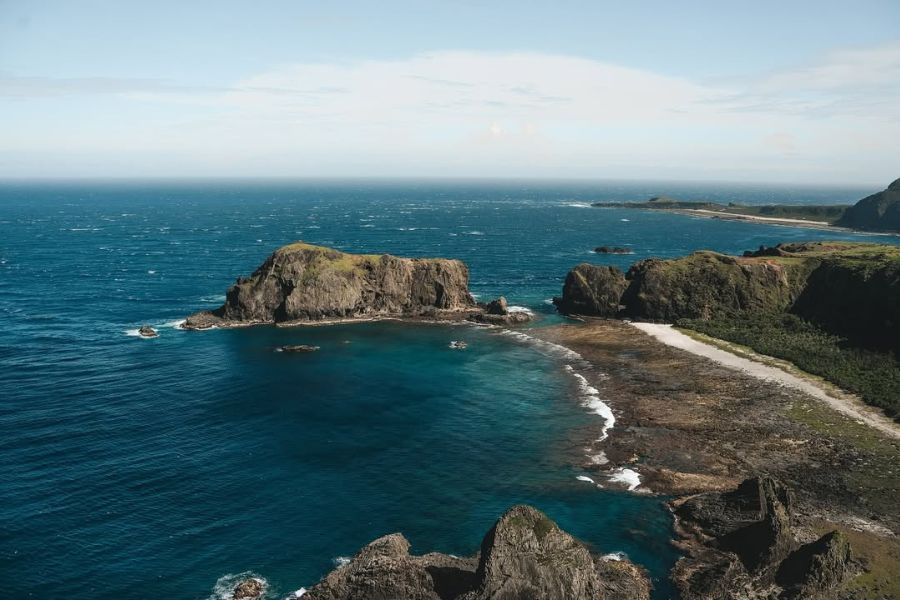
(Photo credit: @yoyo83818)
