


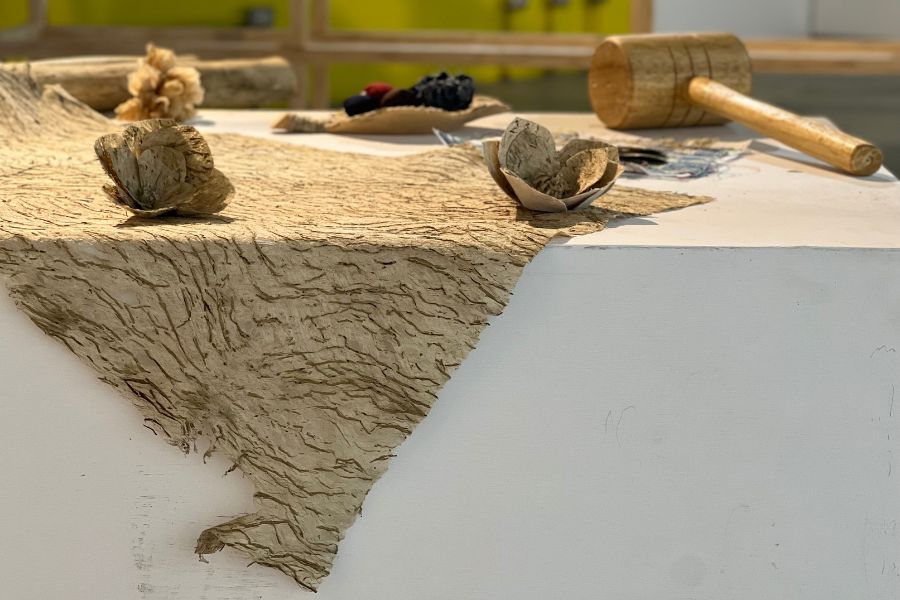
Bark cloth is one of the most iconic traditional crafts of the Austronesian peoples. Long before the invention of weaving, people repeatedly pounded the bark of the paper mulberry (Broussonetia papyrifera) and other Moraceae family species into fibers to produce cloth. Paper mulberry, with its remarkable vitality, is widely found in Taiwan, often sprouting from cracks in walls and other narrow crevices. Its fibrous bark was long a major material used by prehistoric communities and Austronesian groups to make bark clothing.
In 2015, a research team led by Academia Sinica scholar Chung Kuo-Fang discovered that only one sex of paper mulberry exists across the Pacific; unable to reproduce naturally, it requires human cultivation. This contrasts with Taiwan’s paper mulberry, which reproduces through seeds. The finding confirmed that Pacific paper mulberry originated in Taiwan and serves as important botanical evidence for the migration of Austronesian peoples.
(Photo credit: Taitung County Farmers’ Association)
Indigenous Memories in the Sound of Pounding Bark
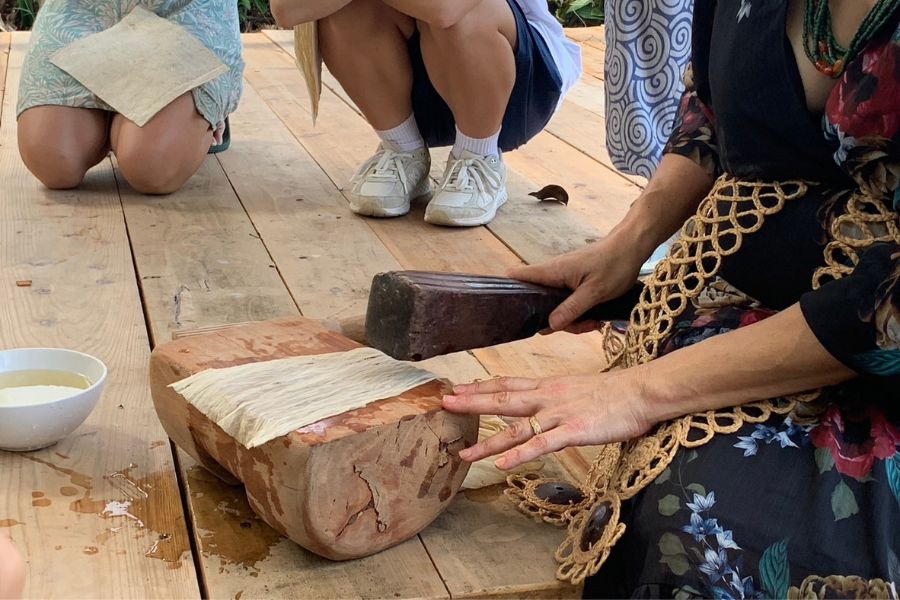
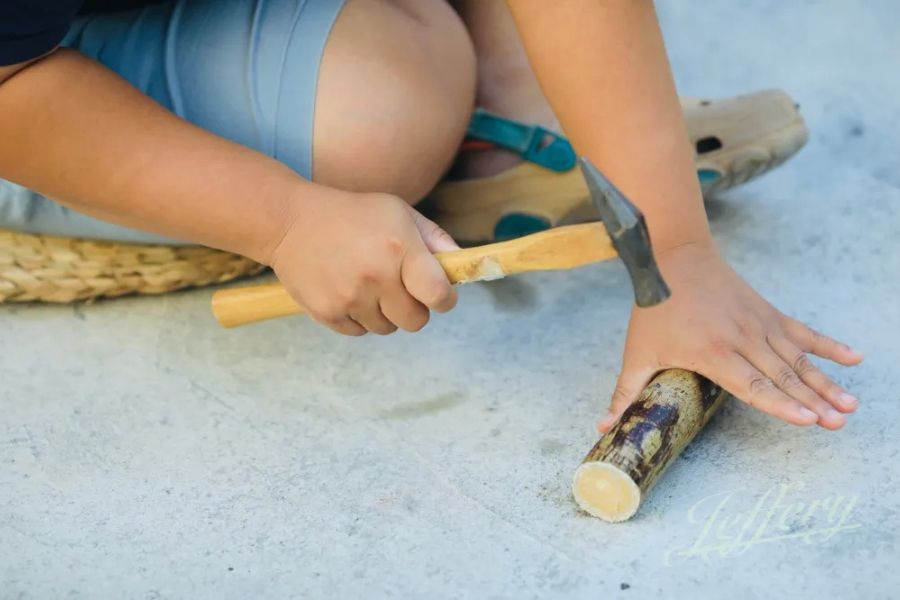
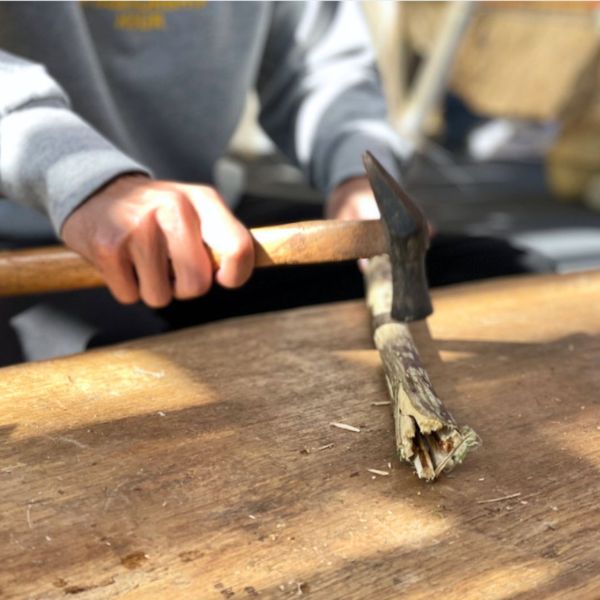
The process of making bark cloth is complex and highly ritualized, involving harvesting, soaking, repeated pounding, and sun-drying. Each step embodies ancestral knowledge passed down through the generations. In the past, bark clothing was worn by the Amis people for important affairs and ceremonies. As woven textiles became more readily available, this craft gradually disappeared from communities and remained lost for nearly sixty years.
(Photo credit: Taitung County Farmers’ Association)
Around 1995, Dulan community chief Shen Tai-Mu, former chief Pan Ching-Wen, and other community elders began reconstructing the craft based on oral history and repeated experimentation. Their efforts revived old techniques and sparked renewed attention for bark cloth along Taiwan’s east coast.
(Photo credit: @krupa.tw)
In 2021, the three Amis members of the band Outlet Drift claimed their Golden Melody Award for Best Indigenous Language Album arrayed in bark garments made from paper mulberry and banyan, bringing traditional bark cloth into the international spotlight and reigniting public discussion about the Austronesian bark cloth culture.
(Photo credit: @ciplimatw)
From the Forest to Contemporary Creation
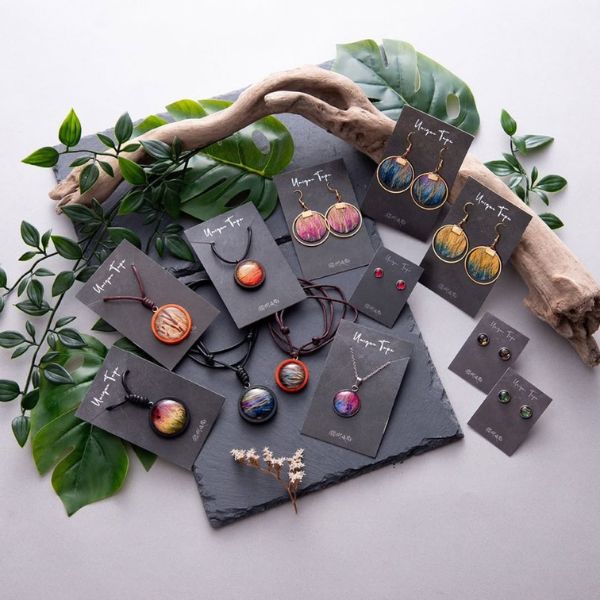
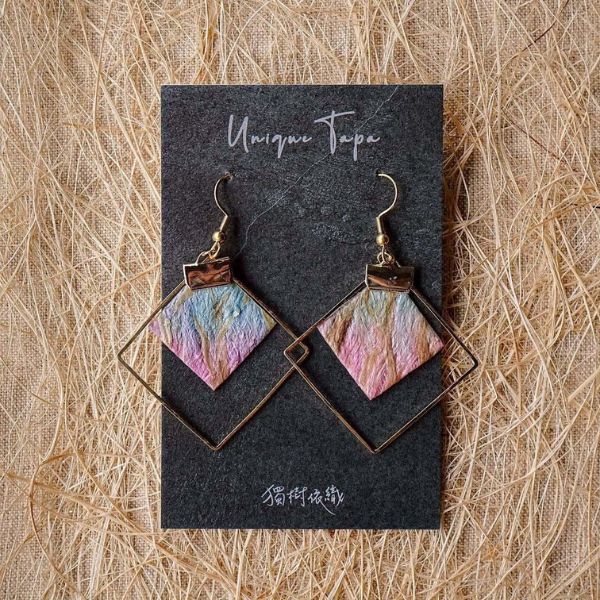
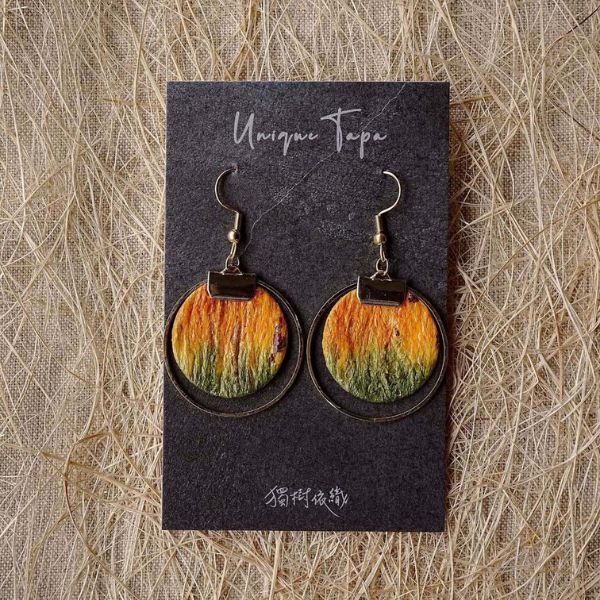
Young artist Lin Rong-Yi has studied the bark cloth craft with elders from Dulan for more than eight years and founded Unique Tapa (“tapa” means “bark cloth”), integrating traditional techniques with modern sewing, dyeing, and mixed-media creation. She emphasizes the importance of praying to the trees before harvesting their bark, believing that every tree—regardless of size—has its own spirit. Taking only what is needed is what the elders have taught her and is a core aspect of living in harmony with nature.
The Taitung County Government has actively promoted the preservation of Austronesian culture through courses in Indigenous communities and capacity-building programs for artisans, enabling more people to learn about this precious craft.
Transmission Alive in Museums
The National Museum of Prehistory collaborates with local artisans in hosting bark cloth workshops. On the eve of the Lantern Festival one year, it organized a family activity titled “Making Your Own Bark Cloth Lantern.” At the workshop, led by Liu Chin-Chiao, head of Kaiana Workshop, participants combined paper mulberry bark with recycled plastic bottles and LED lights to create unique handheld lanterns; they even got to do the bark pounding themselves. Registration filled up almost instantly, making clear the public’s enthusiasm.
Meanwhile, the Tainan Branch of the National Museum of Prehistory has created 3-D scenes from the Dabenkeng period to show visitors how prehistoric peoples produced bark cloth thousands of years ago.
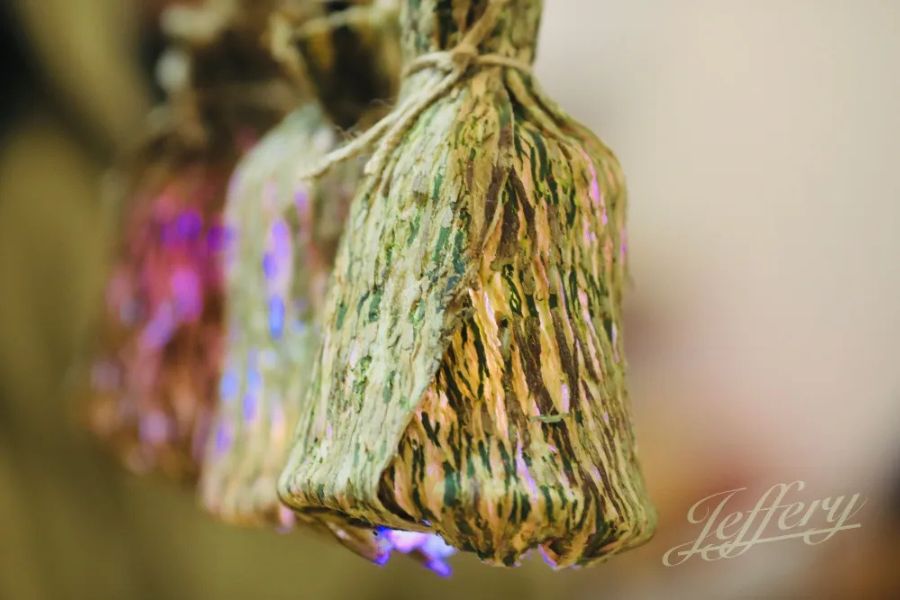
(Photo credit: @krupa.tw)
(Photo credit: @atitanartshop)
(Photo credit: @ciplimatw)
The Sound of Cultural Sustainability
From bark cloth lamps and book covers to earrings and ornaments, these creations are not only displays of beautiful craftsmanship but also vehicles of cultural transmission. Lin Rong-Yi has said, “Making bark cloth is not difficult. The hardest part is entering the forest.” Returning to a way of life that coexists with nature is the essence of the bark cloth culture.
As the rhythmic pounding once again echoes through the land, it signals more than the continuation of a craft—it is the enduring resonance of Austronesian cultural memory.